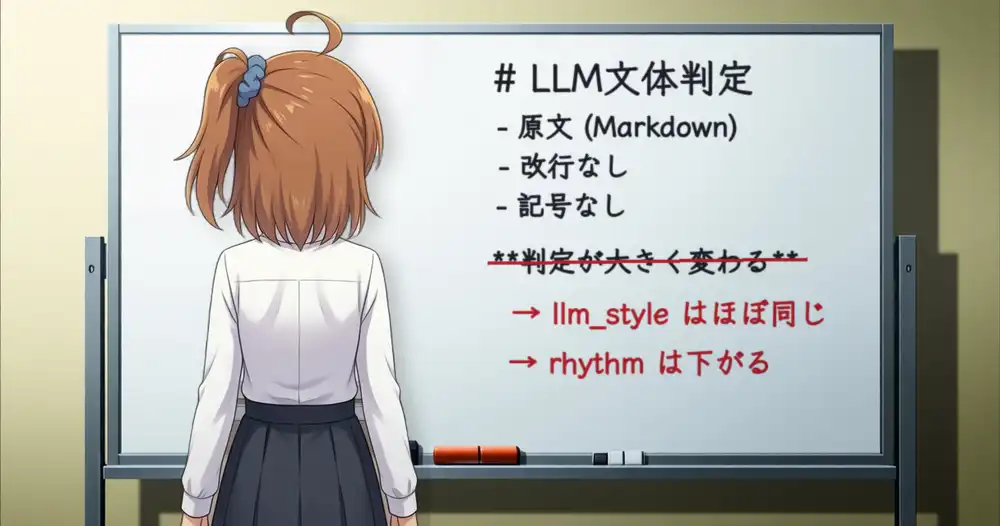
We tested TypeSafe AI's Jev across raw Markdown, stripped newlines, and plain text to examine whether LLM style scores shift. Even across multi-model rubrics from Claude, Gemini, and Qwen, the gap remained remarkably consistent.
Tested with 16 memories and 10 questions: a date bonus on cosine got the 9/9 memory and a 0.441 café-au-lait memory over the 0.45 cutoff, with 0.016 headroom left on hit-free questions.
Ryzen 7 5800HS test before StackChan: subject-less memories got claimed by the character, a 0.45 cosine threshold flipped on a comma, and ModelScope's embedding API vanished mid-test.
Qwen3-Embedding-0.6B on CPU vs ModelScope's API on a Ryzen 7 5800HS voice server. Local embedding adds up to +2.6s per voice turn by competing for CPU; the API adds none.
Tested Qwen3-Embedding-0.6B on CPU and Qdrant's local mode, then checked the 1.5-1.7GB RAM footprint against a Ryzen 7 5800HS voice server with only 4GB VRAM.
Tested on M1 Max 64GB with plain Anima-Base v1.0. A red-to-blue residual direction added to one of Blocks 24-27 flips a flat image, but on a hair mask it paints a blue slab. No hair-only direction found.
A pre-implementation design for adding Qwen3-Embedding and Qdrant memory to an RTX 3050 Ti and CoreS3 voice-chat stack without depending on StackChanWorld's API. It keeps raw logs, searchable memory, persona, and body separate.
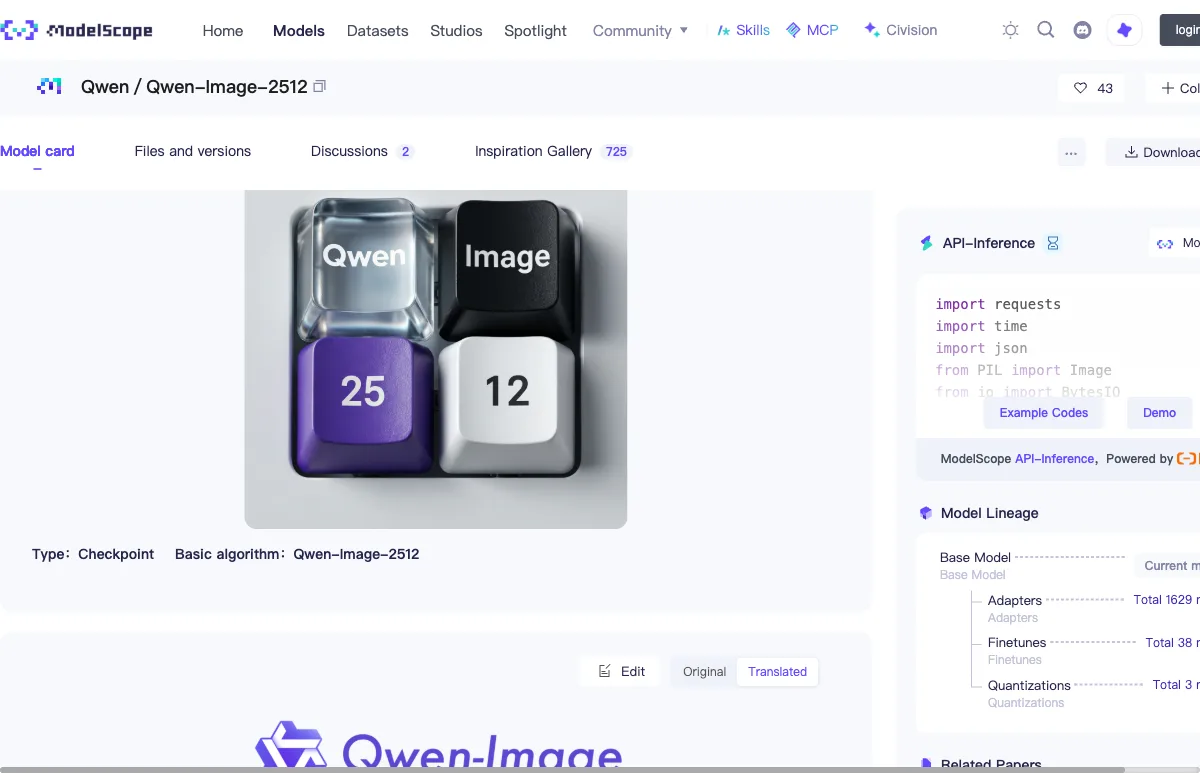
My ModelScope account switched from a monthly API-Inference quota to Magicube coins, so I measured what each call costs. Qwen-Image, Z-Image, Krea-2-Turbo and FLUX worked even though none of them appeared in the /v1/models list I got; of the embedding IDs I tried only Qwen3-Embedding went through; audio paths were 404 and Wan produced no video. In these tests 400s and 404s cost nothing, while a 200 with an empty body was charged.
Tested on EVO-X2 (gfx1151) under Windows + ROCm: the official b10666 binary runs it at pp512 159.25 / tg128 23.26, and the earlier crash was my own workaround flag.
Traced across 31 blog posts and 464 Hugging Face repos: Qwen's capybara debuted Oct 11, 2024, hit blog banners in Jan 2025, and its own edit prompts all say 'the bear'.
Tested on M1 Max 64GB: AtomicChat's M64 GGUF keeps the 51B N-gram table in its own shard, so a llama.cpp PR #27742 build leaves it on SSD and runs the 125B MoE at 17.6 tok/s.
Tested on M1 Max 64GB, ComfyUI v0.33.3: from-behind and a back-row drummer now pass, out-of-frame crops get worse, and Anima-Base LoRAs need a 52-block key remap.