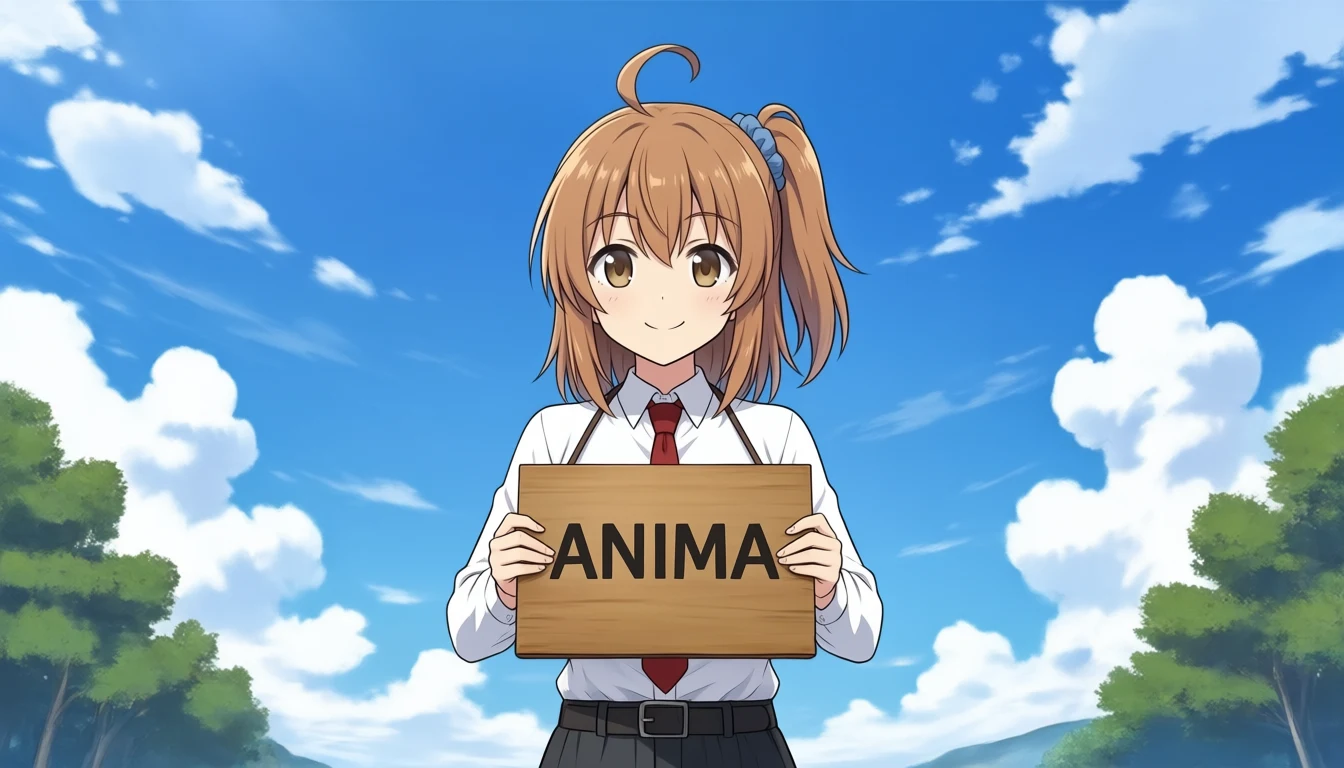
Tested WAI-Anima v1, Anima preview3-base, and WAI-Illustrious v160 side by side on M1 Max 64GB ComfyUI with same seed/prompt. WAI-Anima inherits Anima's atmospheric lighting and natural running poses but still loses to WAI-Illustrious on tag control and character consistency. Includes i2i pipeline test (denoise 0.5), ~275s generation times, and how the Anima derivative ecosystem (WAI-Anima, CottonAnima, Kirazuri, RDBT) expanded in two months.
Tested 5 approaches including Qwen Image Edit, JS color reduction, and Illustrious i2i + LoRA. Illustrious i2i alone turned out to be the fastest and lightest solution for pixel art conversion.
I tested local Vision LLMs (Gemma 3, Qwen2.5-VL, Llama 3.2 Vision, Gemma 4) to see if they could look at character illustrations and pixel art and generate RPG-style stats in JSON format.
Benchmarking NII's LLM-jp-4-32B-A3B-thinking on EVO-X2 (Ryzen AI Max+ 395) with ROCm. 62.9 t/s vs Qwen3.5-35B-A3B's 44.7 t/s. Covers thinking control issues, KV cache trade-offs, knowledge cutoff, Japanese quality comparisons, code generation tests, and training data composition.
Only 10 of 40 layers use KV cache, so raising llama-server ctx-size from 4096 to 65536 cost 800MB VRAM and no throughput. Measured on Ryzen AI Max+ 395.
An update moved inference from FP16 to BF16, and M1-M3 Macs emulate BF16 at half speed. Benchmarks of the regression and the config that lands at 2:30.
Flash-MoE is a C/Metal inference engine that runs Qwen3.5-397B-A17B on a MacBook Pro M3 Max at 4.36 tokens/s. With expert streaming from SSD and hand-written Metal shaders, it fits the 209GB model into a 48GB memory budget.
The three-stage pipeline of BERT perplexity scan → LLM judgment → escalation packaged as a cross-platform Python tool. The installer automatically downloads llama-server and GGUF models.
Using tori29umai’s LoRA to automatically split facial parts, results from batching 28 images, and a log of running into the limits when attempting finer hair separation
Set up the CLI version of NDLOCR-Lite on Apple Silicon Mac, then tested OCR result correction with Qwen 3.5 and Swallow. Includes experiments with direct image reading and the anchoring effect.
An explanation of why Qwen-Image-Edit's VAE is so heavy, how HunyuanImage 2.1 chose a 32x high-compression VAE instead, and how Kohya's memory-optimization work fits in.
A comparison of the Nunchaku quantized build, VNCCS Pose Studio, and the official 2511 model improvements to find better ways to control pose and camera angle.