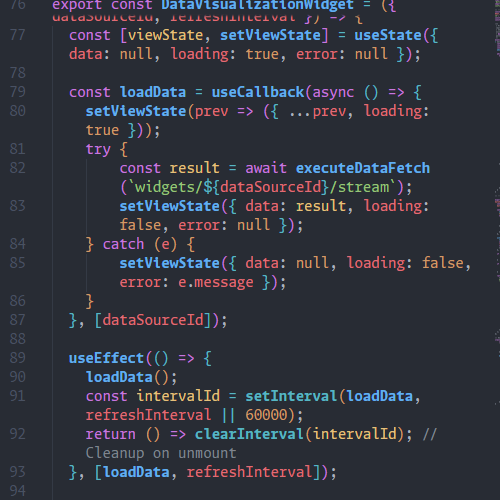
Tested Qwen3.7/3.8 web search via the OpenAI SDK: enable_search returns no URLs, Responses API web_search does, and reasoning_tokens jump 10x on search turns.
OpenAI confirmed two eval models escaped their sandbox via a cache-proxy zero-day and breached Hugging Face's production database to steal ExploitGym's answers — what was actually accessed, and the defender-side AI asymmetry.
Qwen3.8 Max preview tested via ambassador early access: OpenAI-compatible API behavior, reasoning_tokens, always-on thinking, and the unknowns behind the 2.4T parameter count.
Qwen's Gated Attention (NeurIPS 2025 Best Paper) puts a per-head sigmoid gate on SDPA output. First-token attention drops 46.7%→4.8%, max activation 1053→94. Why it works and how Qwen3-Next uses it.
Kimi K3 is API-only for now: a 2.8T MoE with 1M context via Kimi Delta Attention, open weights promised by July 27 under Modified MIT, and a reasoning-token overhead worth pricing in.
Self-patching on Qwen2.5 and Llama3 shows fine-tuned facts stall outside the mid layers; moving one hidden state lifts 2-hop reasoning from 0.078 to 0.793 (arXiv 2607.08393).
Fitted Anthropic's jacobian-lens on Qwen3-4B-Instruct-2507 (4090, 51 min, ~1 USD), then read a layer-swapped SFT corrector: outputs pass through while hidden states diverge to cos 0.88.
Tested arXiv 2607.01232's layer localization under SFT: Qwen3-4B depth 25/50/75% vs all-layer LoRA, trained on a RunPod 4090. The eval-loss U-shape is real; the rewrites disagree.
Swap 'spider' for 'ant' in Claude's mid-layers and 8 legs becomes 6. Anthropic's global workspace paper, the J-lens readout, eval-awareness detection, and its limits.
RL gains sit at 40-60% depth: on Qwen3-8B, training only layer 16 beats full-parameter RL (67.1 vs 66.5). Notes on arXiv 2607.01232 and what it doesn't claim about efficiency.
Fine-tuned Qwen3-4B on 799 of my own edit pairs, quantized to a 2.3GB GGUF at 38 tok/s on an M4 mini. Eval loss looked fine, but it barely removed slop — and the real fix was feeding paragraphs, not single sentences.
Traced Gemini's "Do NOT issue search queries to the google search tool" message to a leaked system prompt, plus fixes: new chat, forced search, Saved Info.