Tested on an RTX 3050 Ti Laptop: Qwen3.8-Omni-Flash handles audio input directly, shrinking our voice chat server RSS from 1,327MB to 118MB with zero idle warmup lag.
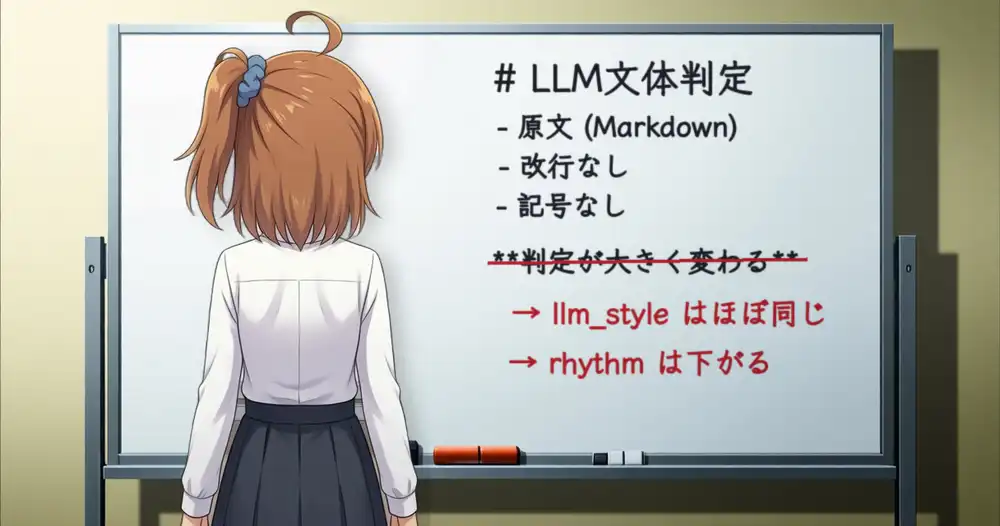
We tested TypeSafe AI's Jev across raw Markdown, stripped newlines, and plain text to examine whether LLM style scores shift. Even across multi-model rubrics from Claude, Gemini, and Qwen, the gap remained remarkably consistent.
Parsed Codex CLI and Claude Code session logs on an M4 Mac mini to track subagent state, time, and tokens. In a 6.5-hour session, the parent waited 68% of the time on children; across 30 days, Codex subagents spent only 5% of active time on tools and 95% waiting on model responses.
Tested with 16 memories and 10 questions: a date bonus on cosine got the 9/9 memory and a 0.441 café-au-lait memory over the 0.45 cutoff, with 0.016 headroom left on hit-free questions.
Ryzen 7 5800HS test before StackChan: subject-less memories got claimed by the character, a 0.45 cosine threshold flipped on a comma, and ModelScope's embedding API vanished mid-test.
Qwen3-Embedding-0.6B on CPU vs ModelScope's API on a Ryzen 7 5800HS voice server. Local embedding adds up to +2.6s per voice turn by competing for CPU; the API adds none.
Tested Qwen3-Embedding-0.6B on CPU and Qdrant's local mode, then checked the 1.5-1.7GB RAM footprint against a Ryzen 7 5800HS voice server with only 4GB VRAM.
Tested on M1 Max 64GB with plain Anima-Base v1.0. A red-to-blue residual direction added to one of Blocks 24-27 flips a flat image, but on a hair mask it paints a blue slab. No hair-only direction found.
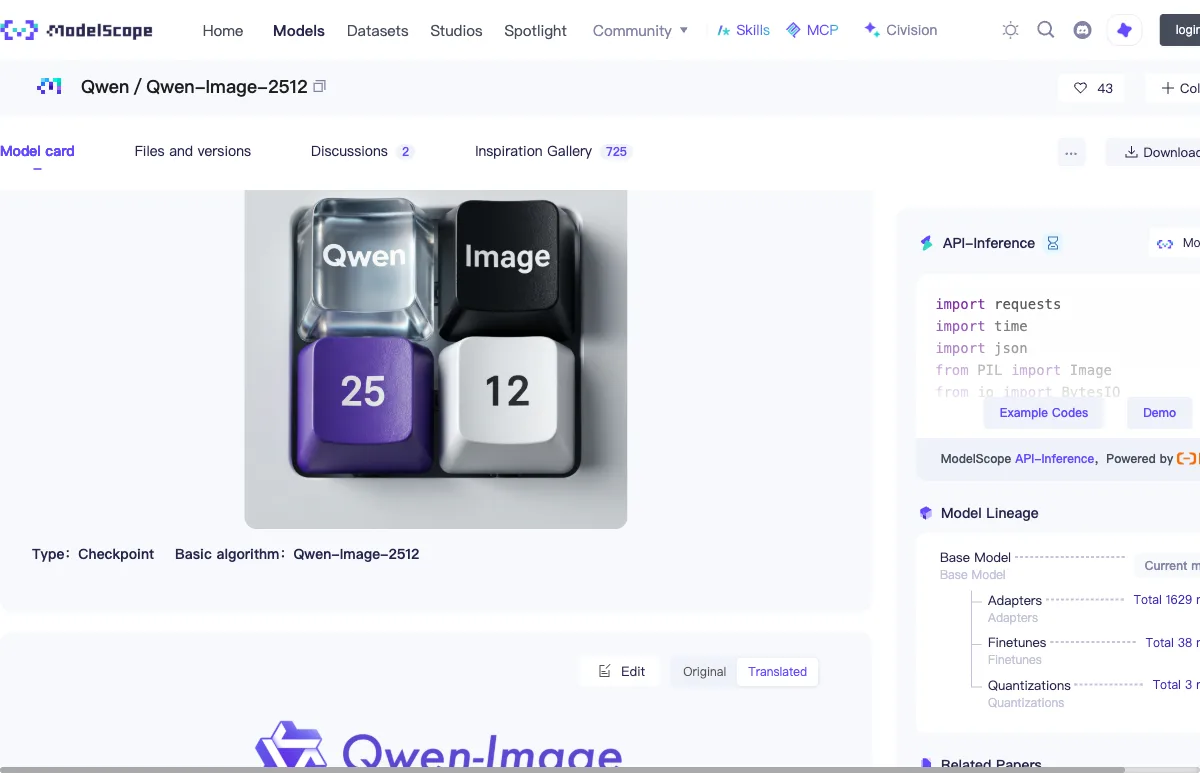
My ModelScope account switched from a monthly API-Inference quota to Magicube coins, so I measured what each call costs. Qwen-Image, Z-Image, Krea-2-Turbo and FLUX worked even though none of them appeared in the /v1/models list I got; of the embedding IDs I tried only Qwen3-Embedding went through; audio paths were 404 and Wan produced no video. In these tests 400s and 404s cost nothing, while a 200 with an empty body was charged.
Tested on EVO-X2 (gfx1151) under Windows + ROCm: the official b10666 binary runs it at pp512 159.25 / tg128 23.26, and the earlier crash was my own workaround flag.
On an M4 Mac mini (Codex 0.150.1), stdio MCP servers keep the controlling terminal, so a child reading the tty SIGTTIN-stops the CLI. Shell tools got setsid; MCP didn't.
Tested on M1 Max 64GB: AtomicChat's M64 GGUF keeps the 51B N-gram table in its own shard, so a llama.cpp PR #27742 build leaves it on SSD and runs the 125B MoE at 17.6 tok/s.