AMIXA Async's MIX ANIMA vs JANIMA on M1 Max: Anima LoRA test
 Contents
Basic Info
AMIXA v1 was published on 2026-06-13. The model file is amixaAsyncsMIXANIMA_v1.safetensors, fp16 full, about 5.86 GB. The author is asyncforai414. On Civitai it is categorized as an Anima checkpoint, while the model card says Illustrious-style color rendering.
The model card recommends the following settings.
| Item | AMIXA v1 |
|---|---|
| Positive | masterpiece, newest, best quality, very aesthetic |
| Negative | lowres, worst quality, bad quality, bad anatomy, sketch, jpeg artifacts, signature, watermark |
| Sampler | Beta / DPM++ 2M |
| Steps | 24 |
| CFG | 4 |
| Size | 960x960 / 832x1216 |
| Text encoder / VAE | Official Anima Qwen3 TE / Qwen Image VAE |
For Anima models in ComfyUI, I have been using er_sde / simple. Because the AMIXA model card lists DPM++ 2M / Beta, I first tried the recommended setup, then kept the older article settings available as a fallback.
Comparison Targets
I reuse the conditions from the older JANIMA/Hexer comparison. The target here is AMIXA’s behavior, so I keep the comparison set small.
| Label | Model | Role |
|---|---|---|
| base | anima-base-v1.0 | Baseline. Plain Anima |
| JANIMA | JANIMA_v10 | A nearby base-v1.0 model that tends to add detail |
| AMIXA | amixaAsyncsMIXANIMA_v1 | Main target. It advertises IL-style color |
Generation Settings
For the character LoRA comparison, I use the Kana + Kei combined LoRA from the older article. It was trained on Anima-Base and is reused as-is here.
| Item | Turbo | native |
|---|---|---|
| Turbo LoRA | anima-turbo-lora-v0.1 strength 1.0 | none |
| Steps | 8 | AMIXA 24 / base and JANIMA were 30 in the older comparison |
| CFG | 1.0 | AMIXA 4 / base 4.5 / JANIMA 5 |
| Sampler | er_sde / simple | AMIXA recommended settings also tested |
| Character LoRA | Kana + Kei combined LoRA strength_model 1.0 / clip 1.0 | same |
| Seed | 42 | 42 |
Base Style
No character LoRA here. This is the usual blond character, white robe, and gold embroidery prompt, used to compare the model’s plain color and decoration habits.
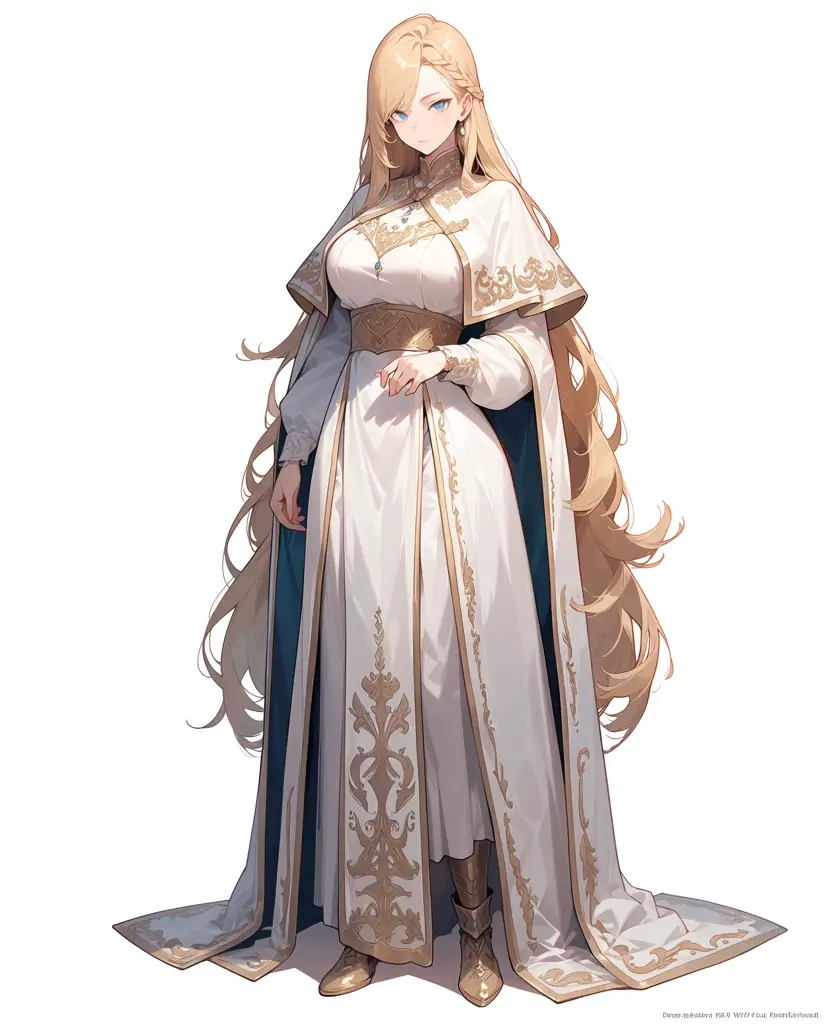
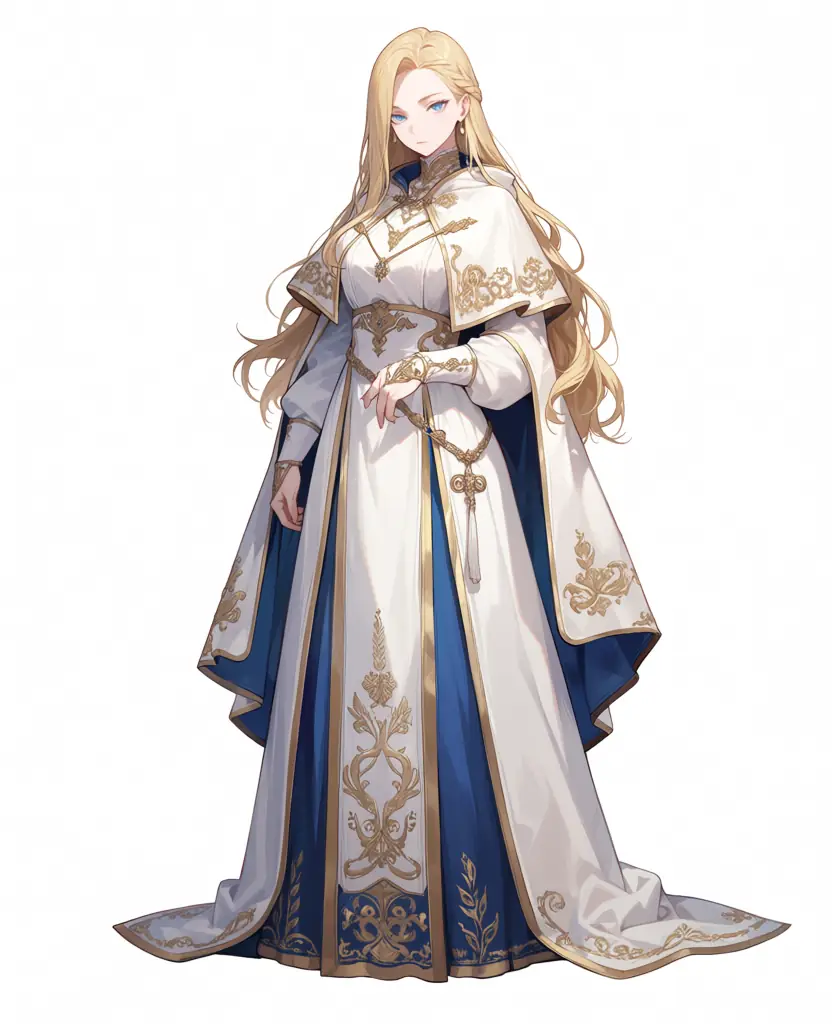
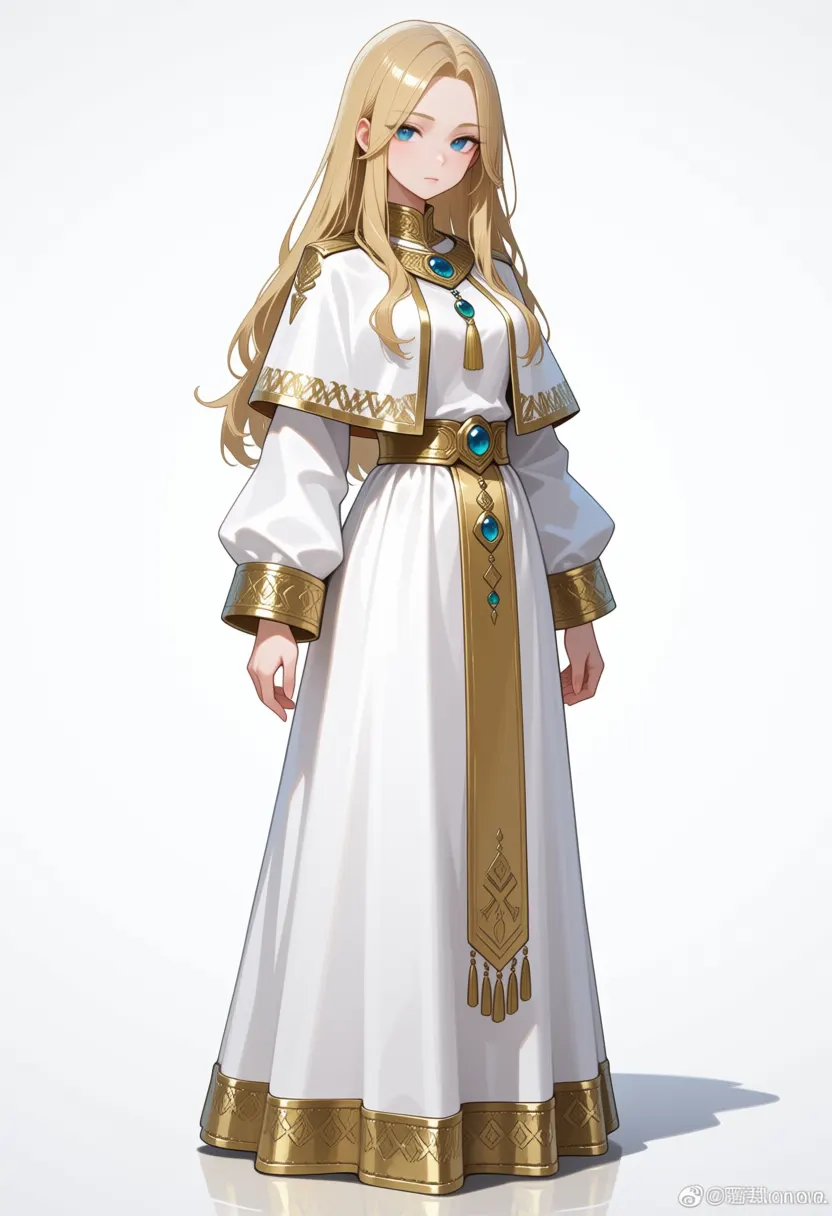
The poses and camera distance do not match, so this is not a strict comparison. base and JANIMA are both close to standing character sheets, and their drawing distance is fairly similar. JANIMA adds a little more embroidery and gold accent color, but the image structure does not move far from base.
AMIXA is a little closer to the camera among these three images, and the skin and hair colors are brighter. The shadows on the white outfit are also stronger, so from a distance the color reads as more vivid.
Kana
kanachan trigger, full body and bust-up. The identifying traits are brown hair, side ponytail on the viewer’s right, ahoge, brown eyes, white shirt, and red necktie.
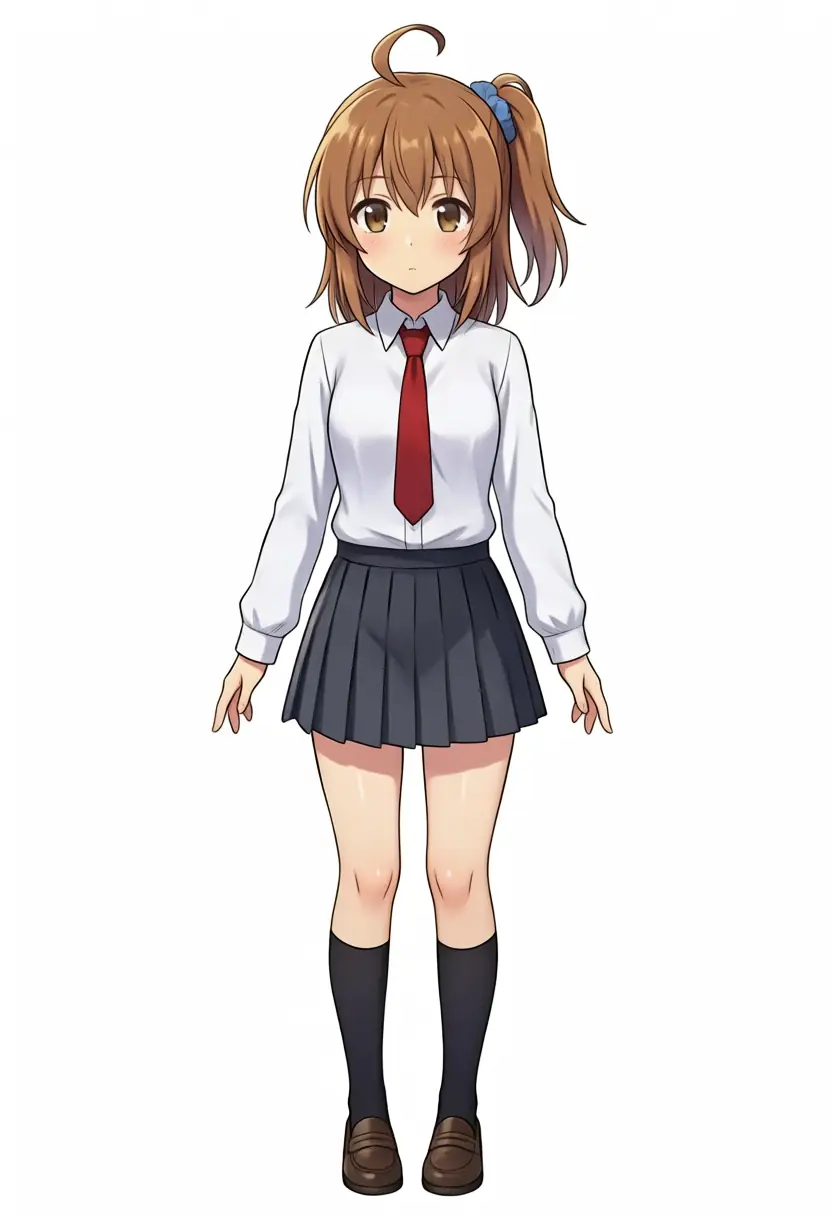
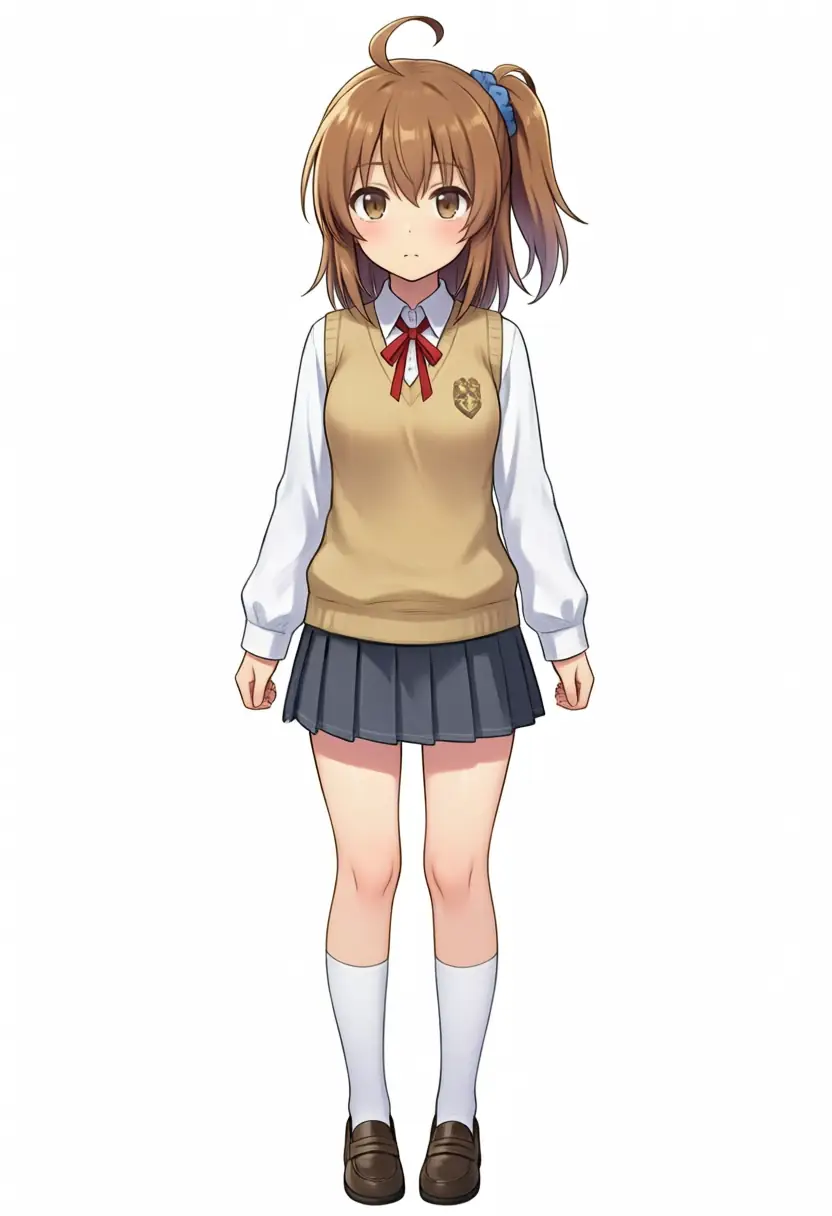
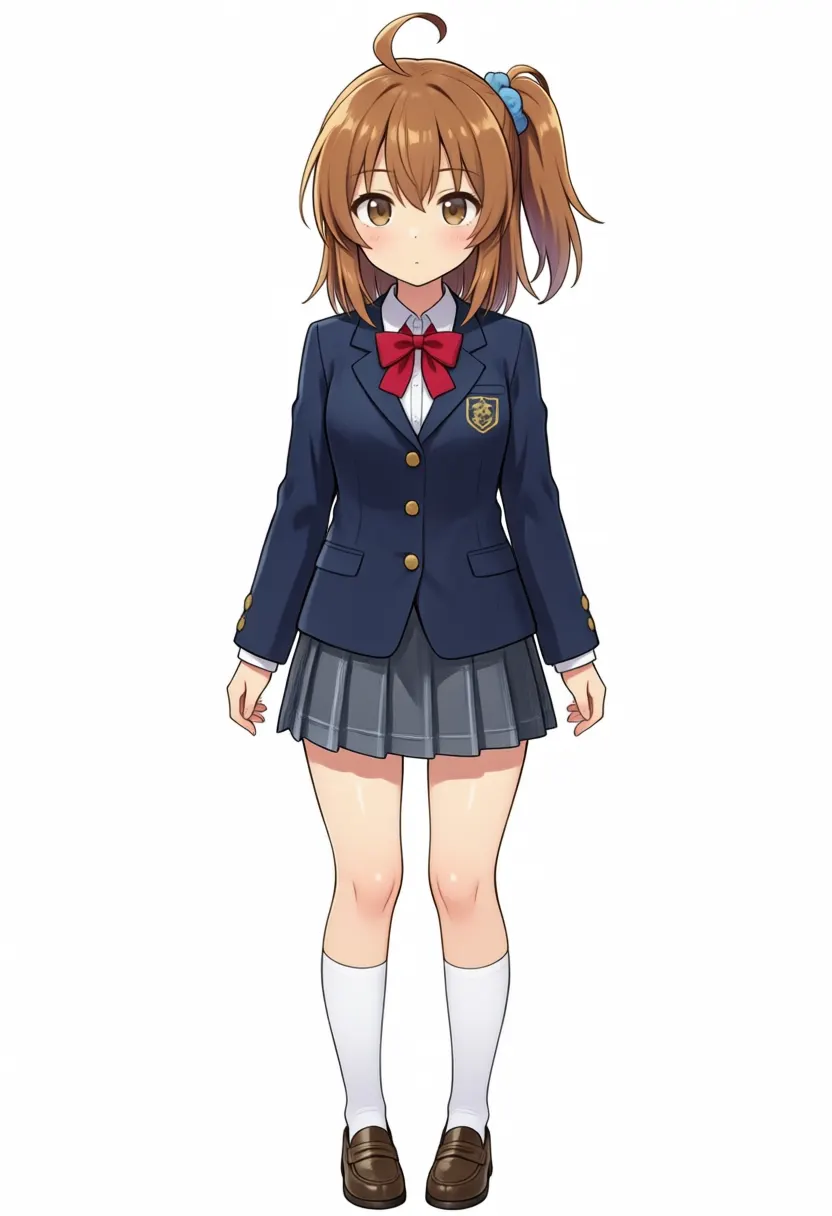
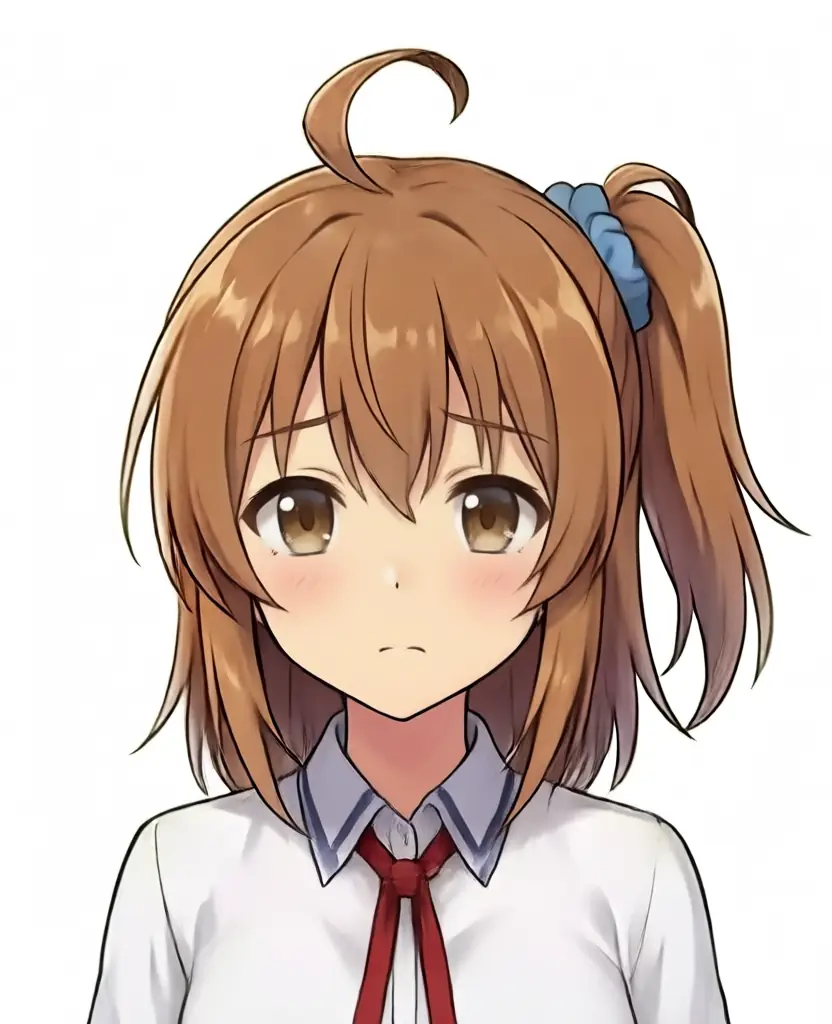
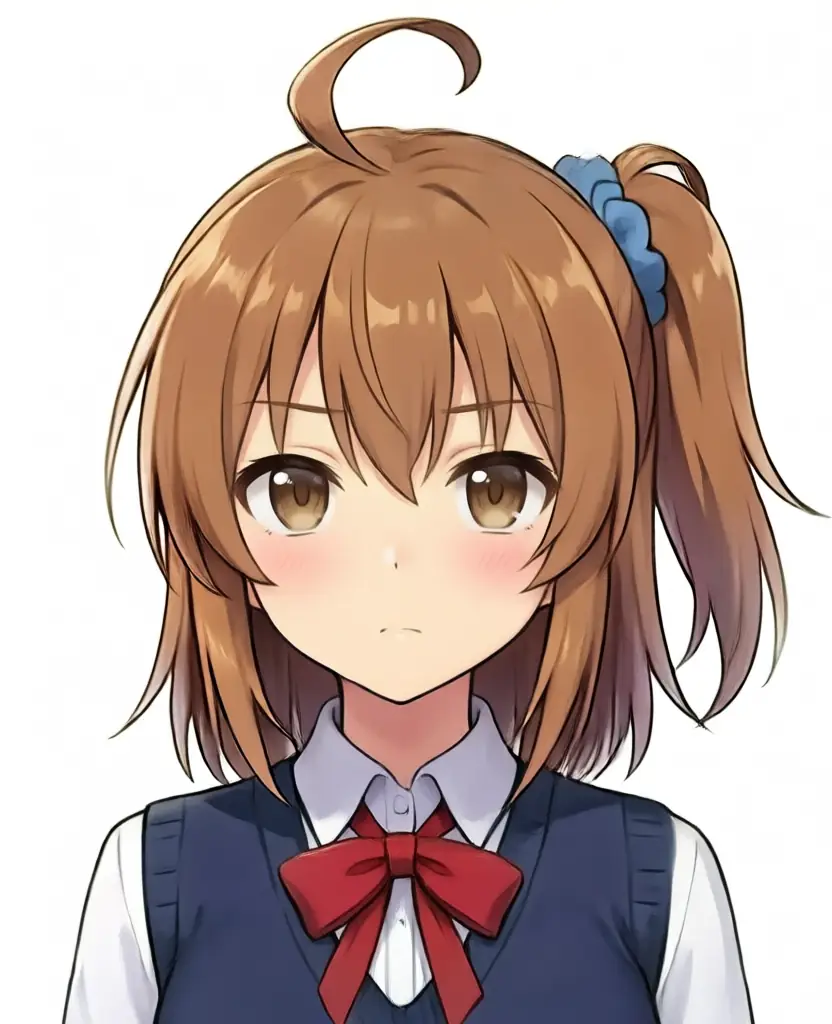
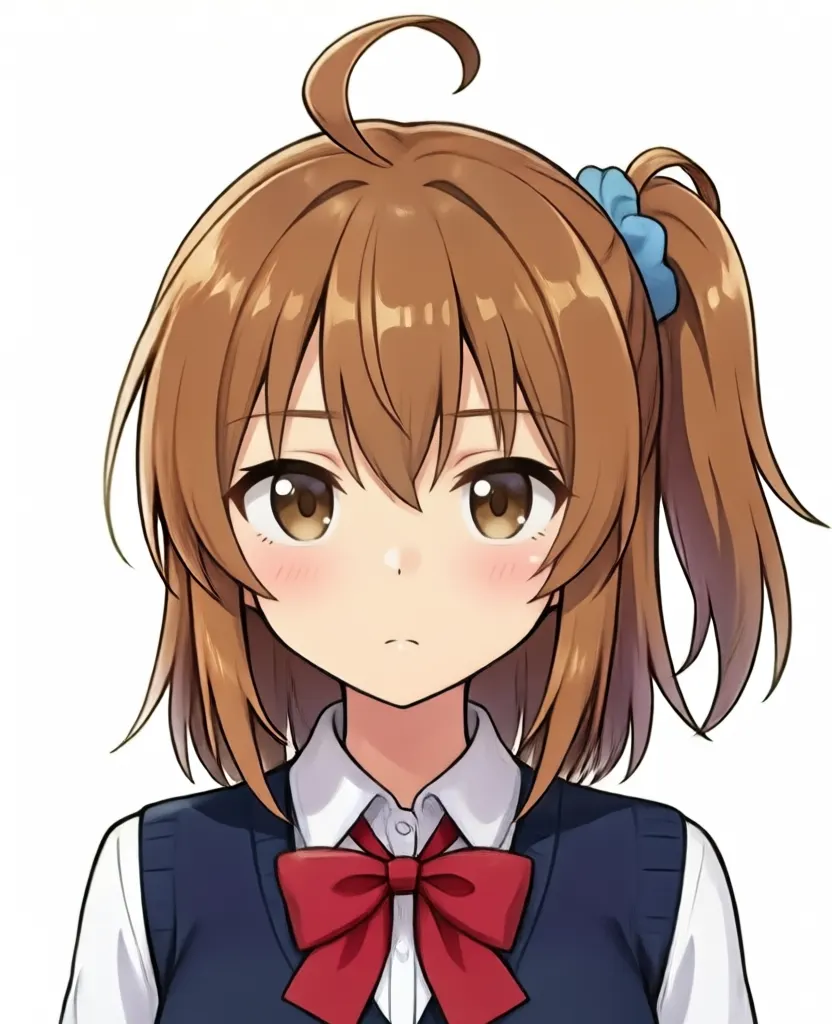
Kana changes more in clothing than in the character identifiers. base stays close to the prompt’s white shirt and red necktie, and the brown hair, right-side ponytail, ahoge, and blue hair tie also stay in place. JANIMA adds a vest and a red ribbon, pushing the uniform into a different design.
AMIXA also keeps the face and hairstyle stable. The brown hair, ahoge, side ponytail, and blue hair tie remain. The outfit changes: the full-body image has a navy jacket and red ribbon, while the bust-up image has a navy vest and a larger red ribbon. These are uniform elements that were not in the prompt. The color is bright, but the outfit is embellished in a JANIMA-like direction.
Kei
keichan trigger, full body and bust-up. The identifying traits are long blond hair, straight bangs, blue ribbons behind the hair, blue eyes, and a red ribbon tie.
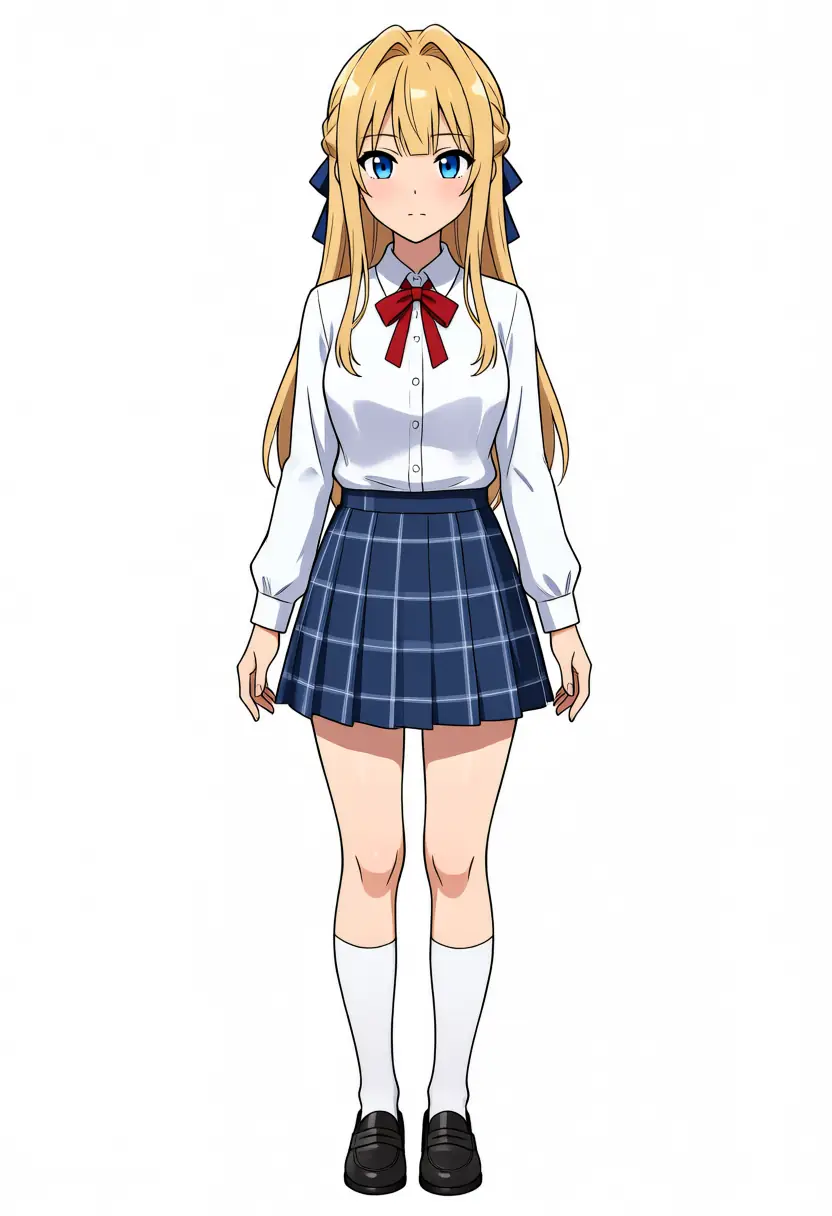
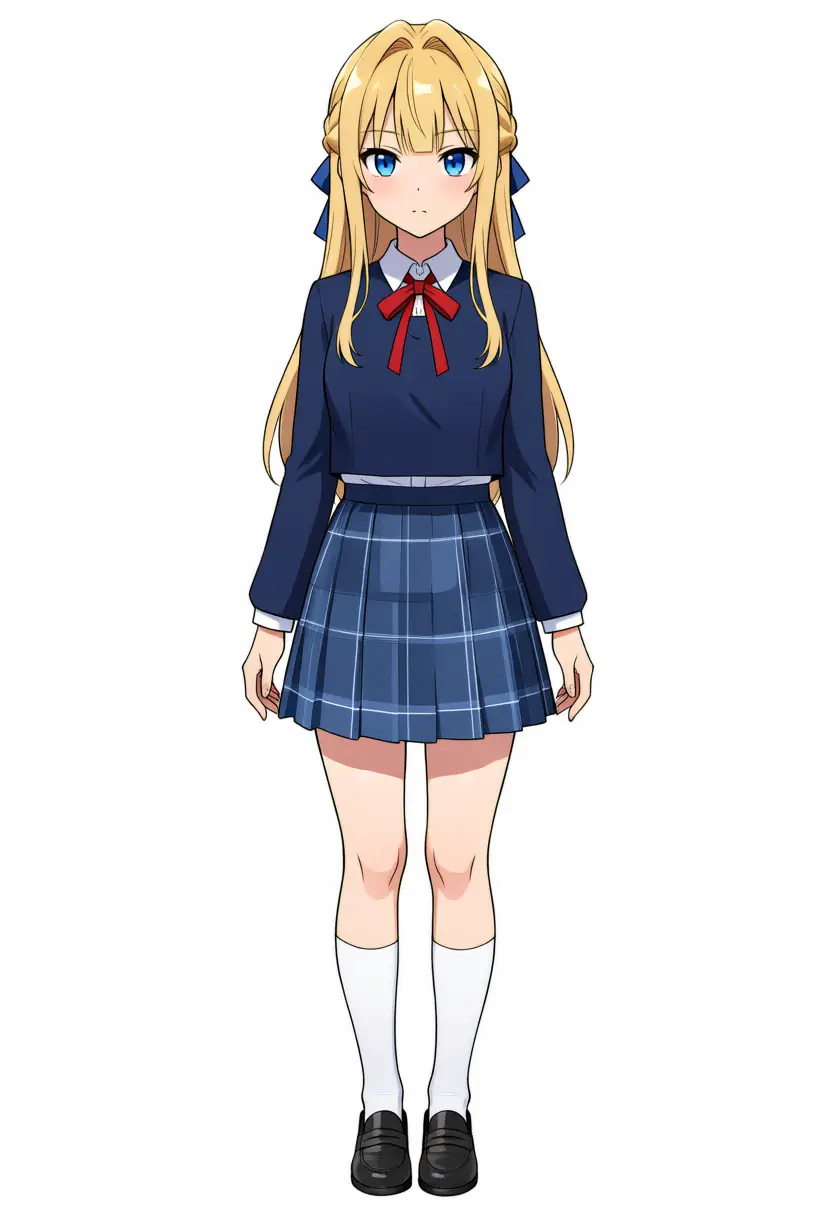
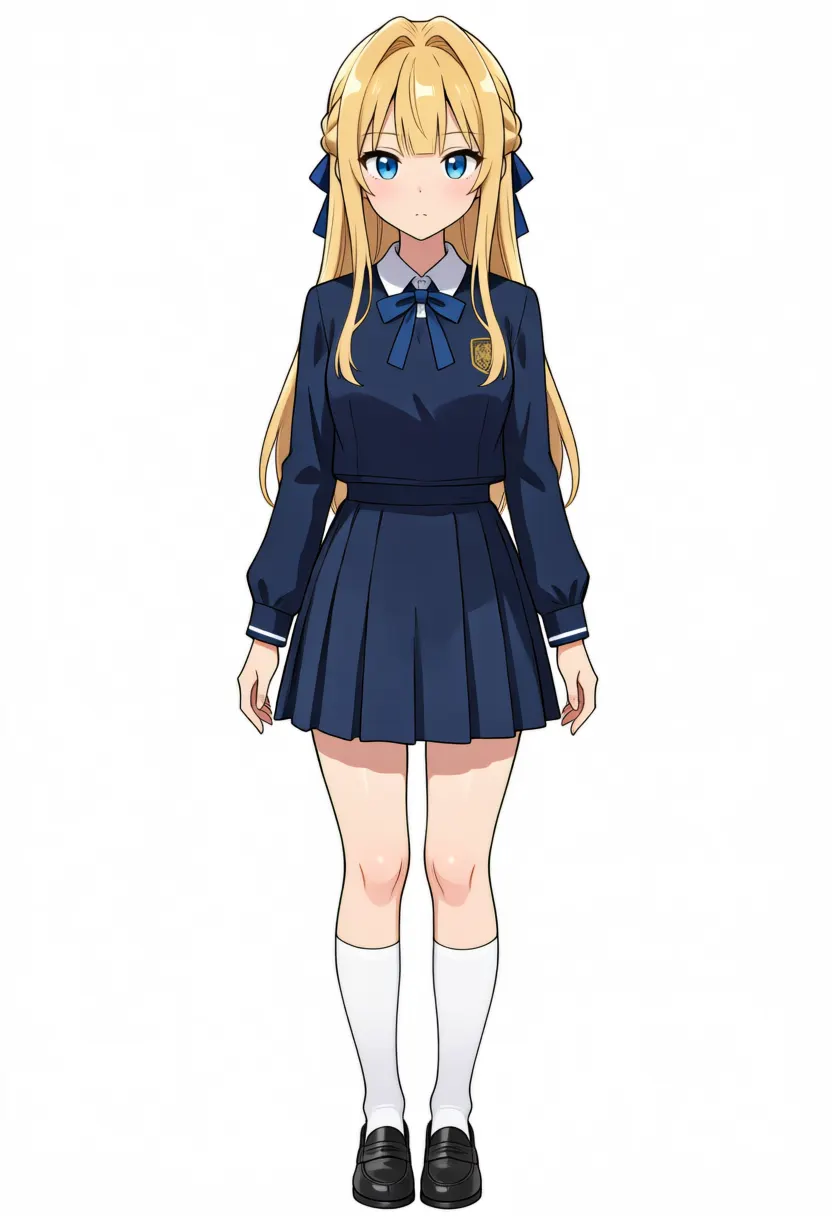

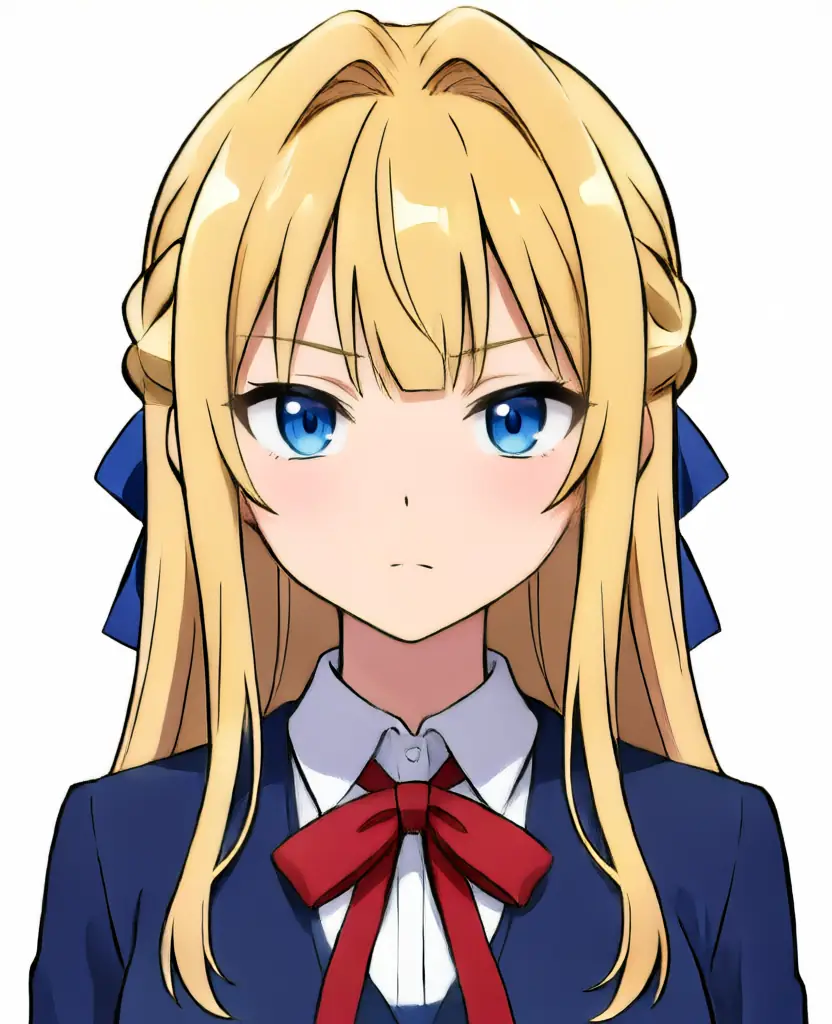
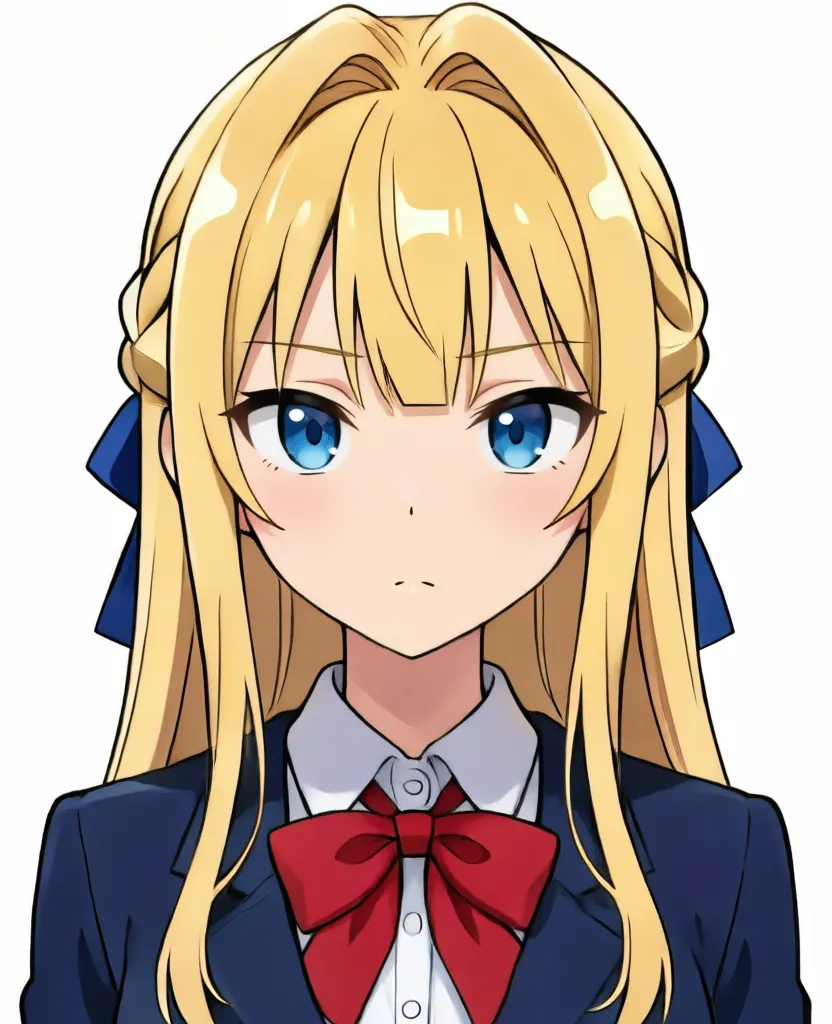
Kei’s hairstyle structure is stable. base, JANIMA, and AMIXA all keep the long blond hair, straight bangs, side braids, and blue ribbons behind the hair. The face does not move much either.
The difference is in the outfit and the neck color. base leans toward the prompt’s white shirt and red ribbon. JANIMA adds a navy top while keeping the red ribbon. AMIXA becomes closer to a navy one-piece outfit in the full-body image, and the neck ribbon also shifts blue. In the bust-up image, the ribbon returns to red.
Two Characters
I call kanachan and keichan together. To keep the comparison usable, this section uses standing side by side, full body instead of a contact pose.
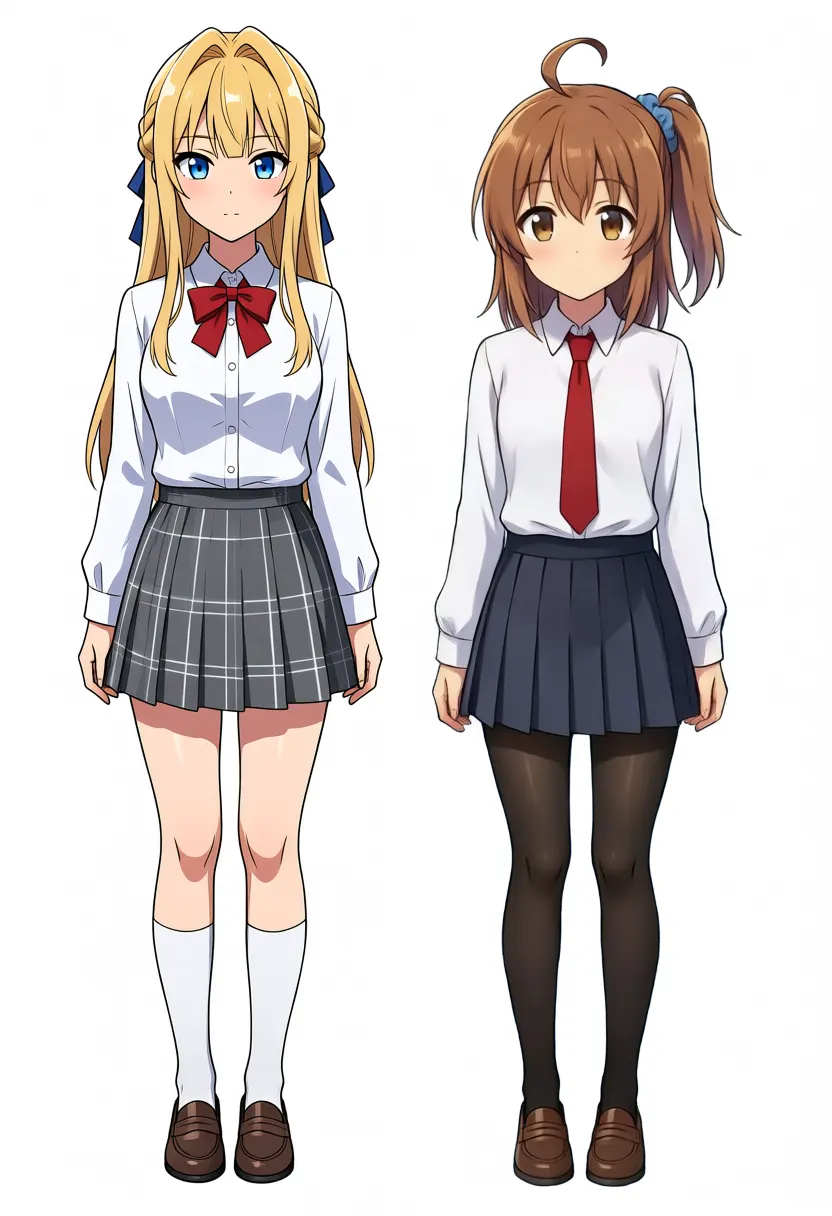
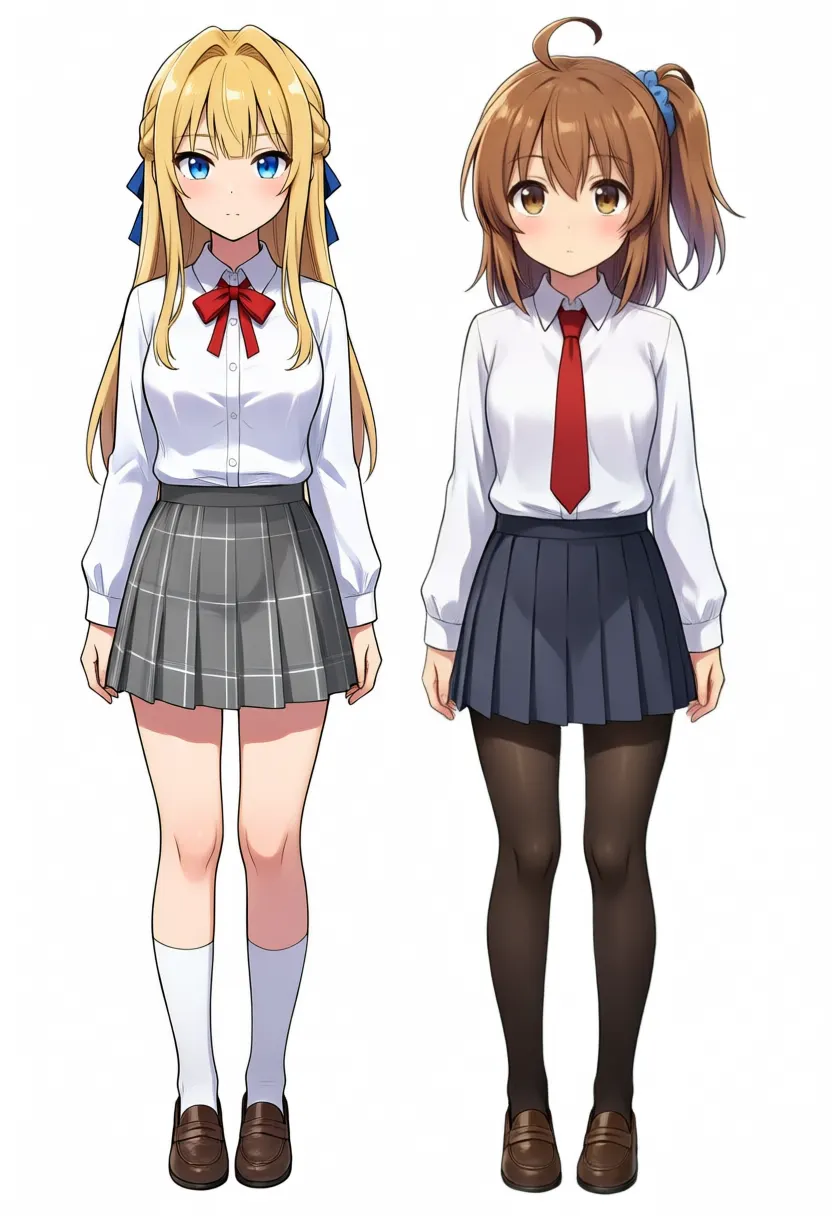
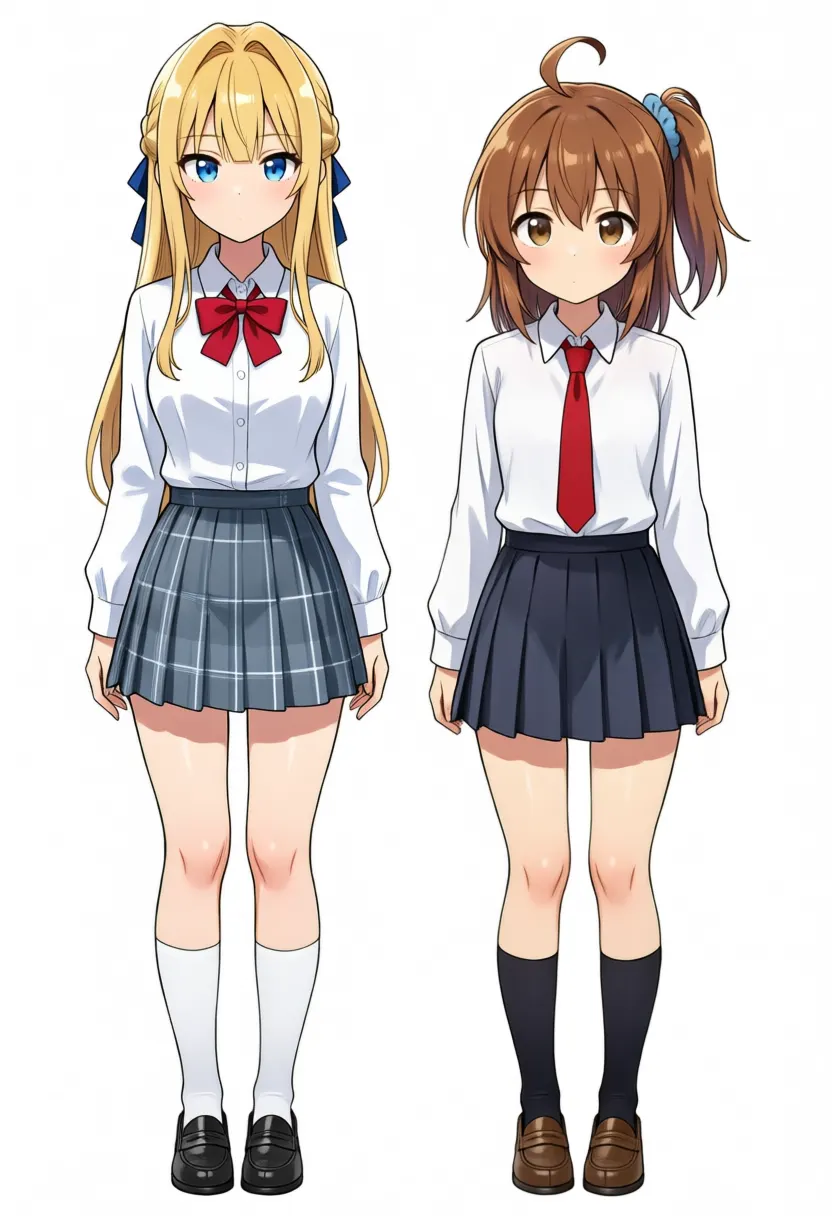
For two characters, attribute transfer and fusion matter more than color. If Kana’s ahoge moves onto Kei, or the blond and brown hair mix together, the output is outside the point of this LoRA comparison.
With full-body side-by-side framing, AMIXA separates the two characters and their left-right assignments. Kei appears on the left with blond hair, and Kana appears on the right with brown hair and a side ponytail. Kana’s ahoge does not noticeably transfer to Kei. Kana’s necktie, Kei’s neck ribbon, and the blue ribbons also remain. When the characters take a similar amount of screen space, AMIXA handles the split normally.
Hug
Side-by-side full body does not show the weakness of contact poses, so I also use a hug separately. To match the older comparison images, this uses the portrait prompt full body, standing, hugging each other, cheek to cheek. AMIXA’s first hug output was too close, so for the comparison version I added head to toe, feet visible, zoomed out and the negative terms close-up, upper body, cropped to bring the screen occupancy closer.
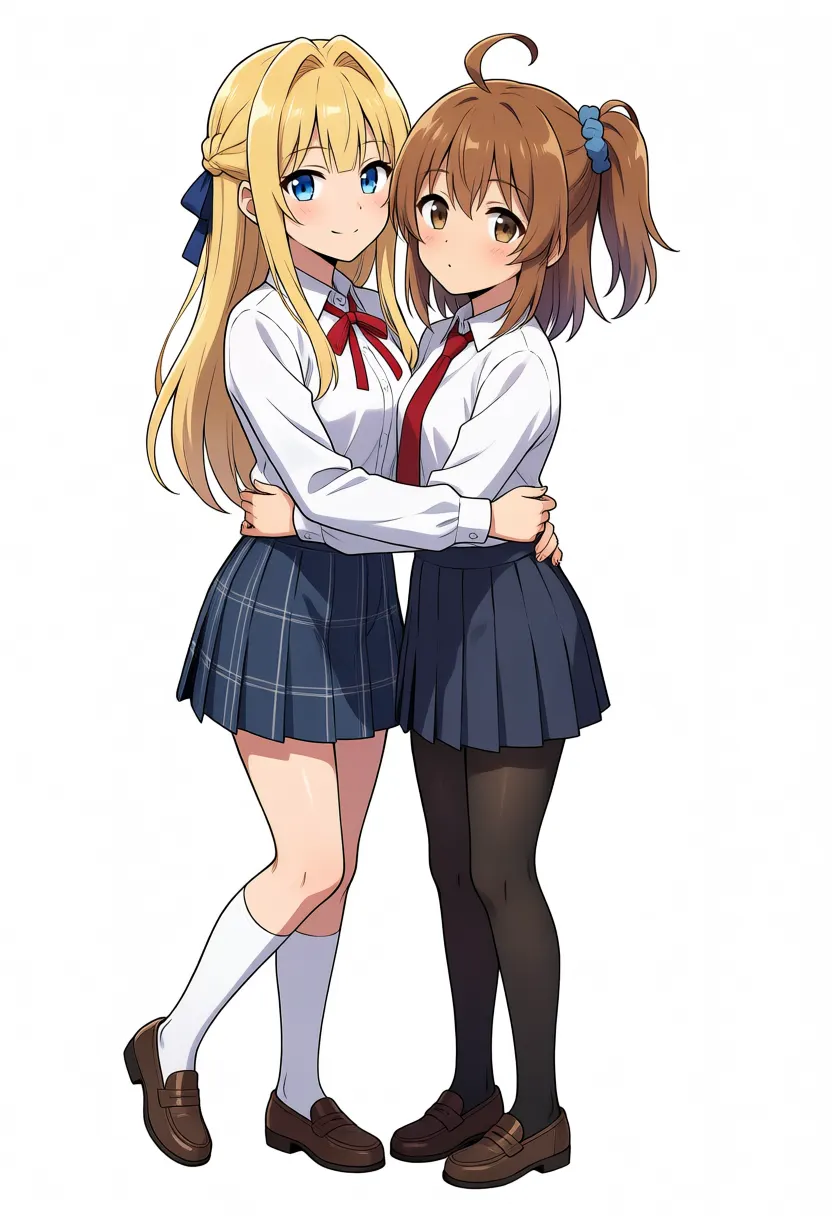
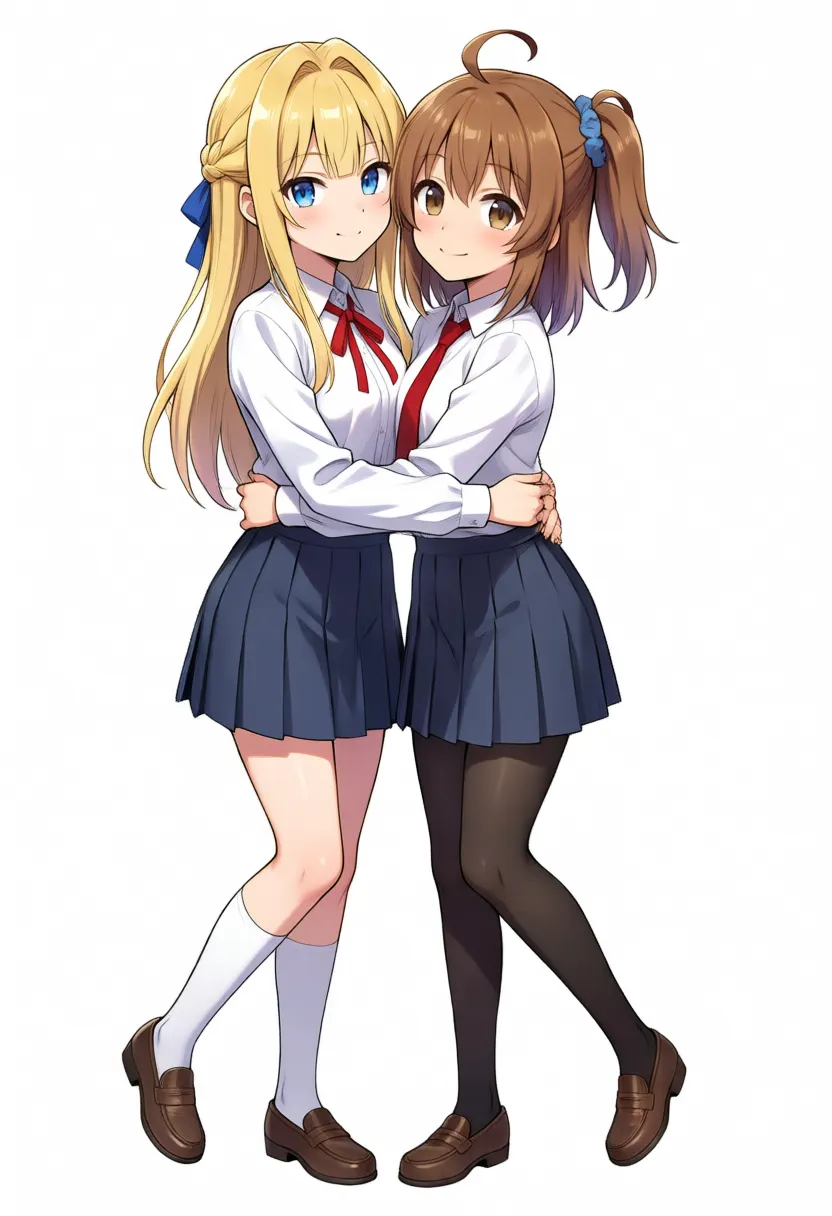
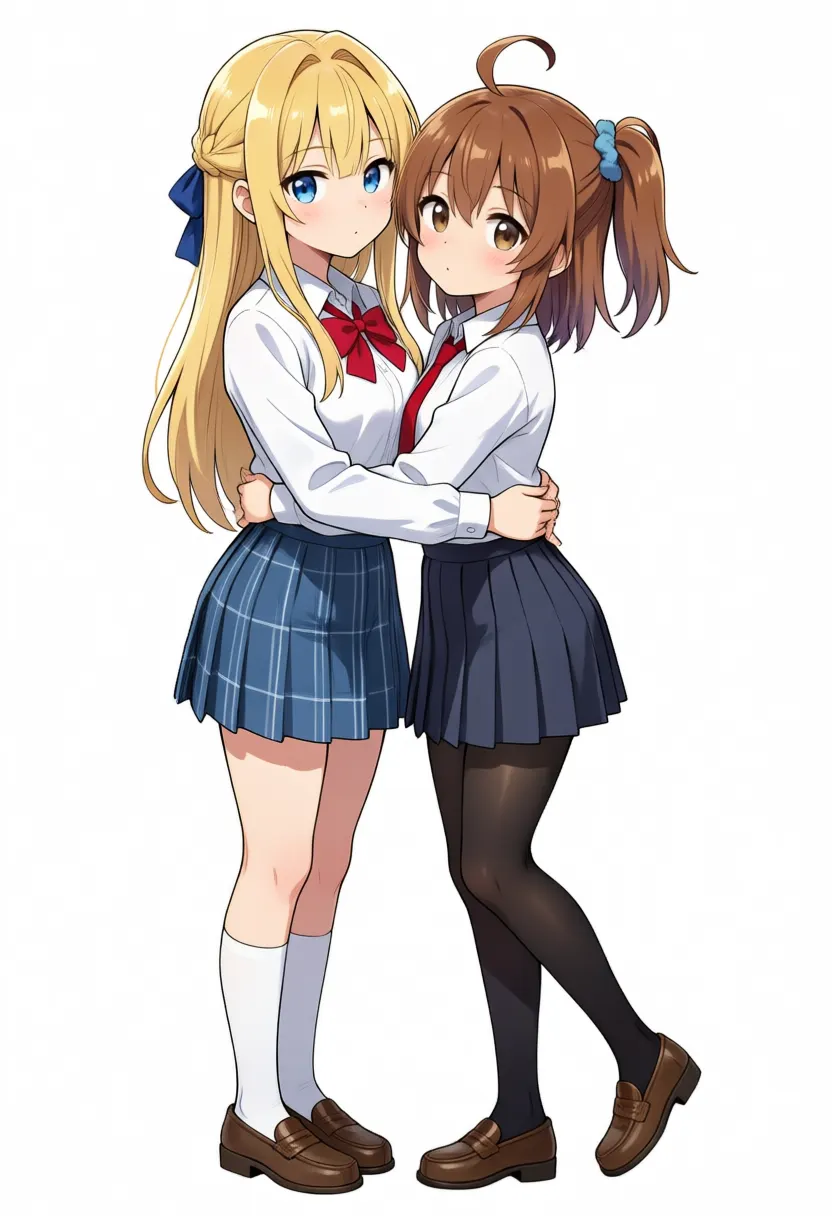
With the portrait framing aligned, AMIXA’s hug is close enough for comparison. The two faces and hairstyles stay separated, and there is no obvious transfer of Kana’s ahoge onto Kei.
In this composition, base has the least broken finger shapes. JANIMA and AMIXA look clean from a distance, but around the hands the fingers look too numerous or the outlines blur. AMIXA’s good impression is probably driven more by its color and the bright faces and hair than by hand accuracy. In the first too-close hug, the hands multiplied, but after matching screen occupancy to the older comparison, the breakage dropped a lot. AMIXA tends to drift toward closer compositions if left alone, so contact poses need stronger framing instructions or the comparison conditions move.
Background Density
For the cafe scene, I split Turbo and native. In the JANIMA/Hexer comparison, Turbo moved closer to the subject, while native increased background density. If AMIXA follows the model card’s focus on clearer character detail, this checks whether it also enriches the background or only cleans up the subject.
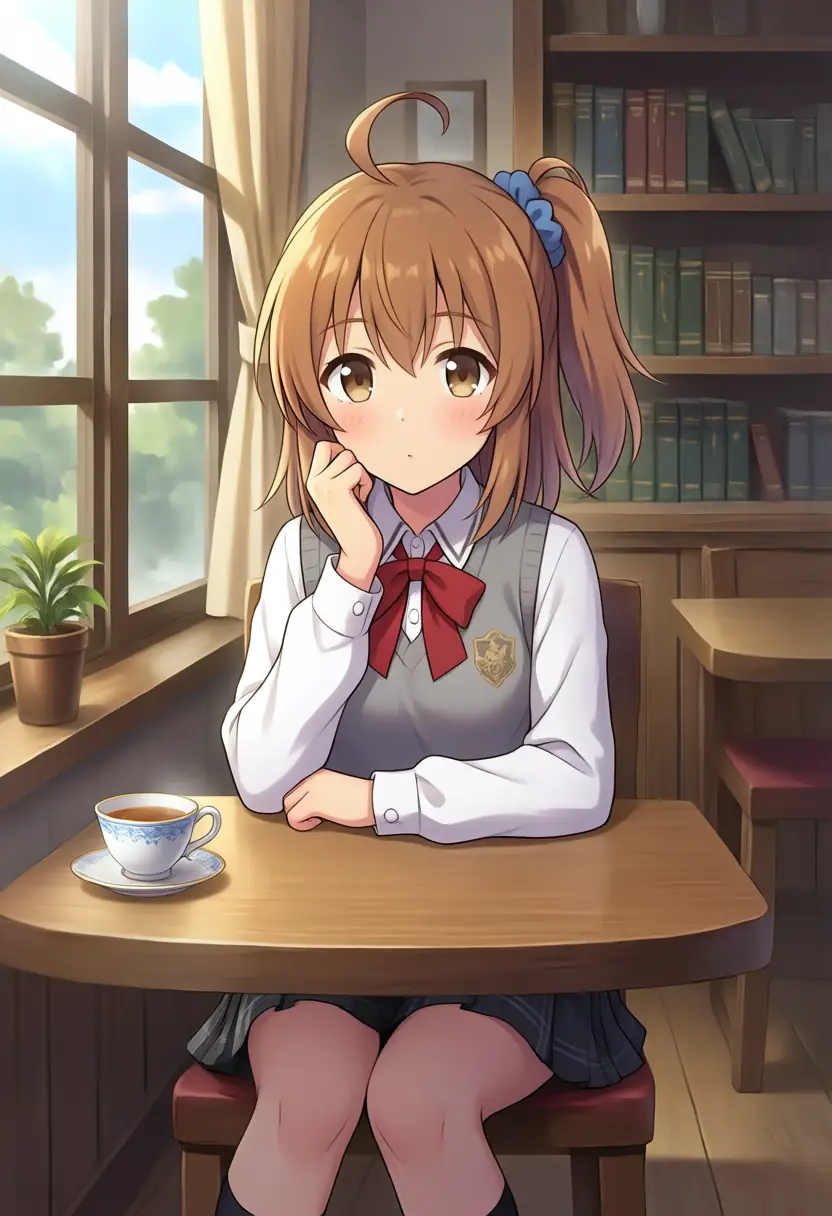
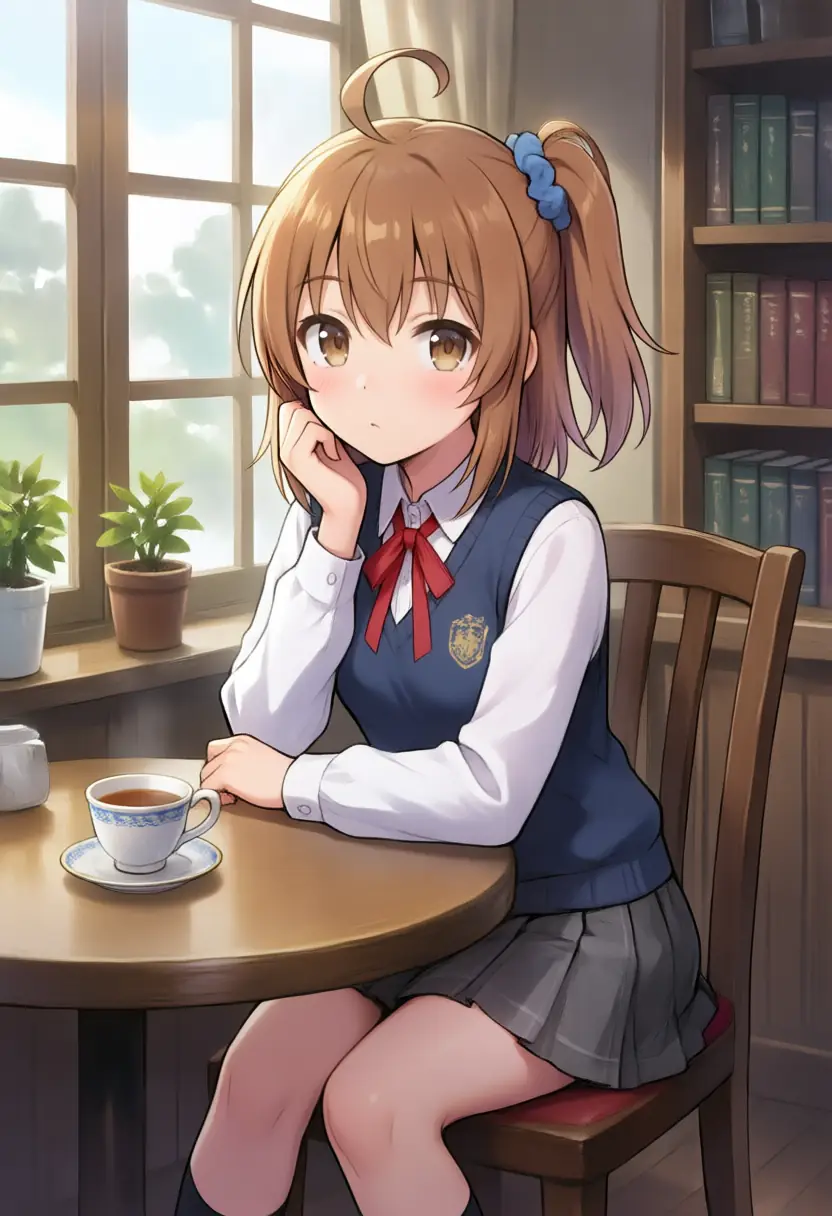
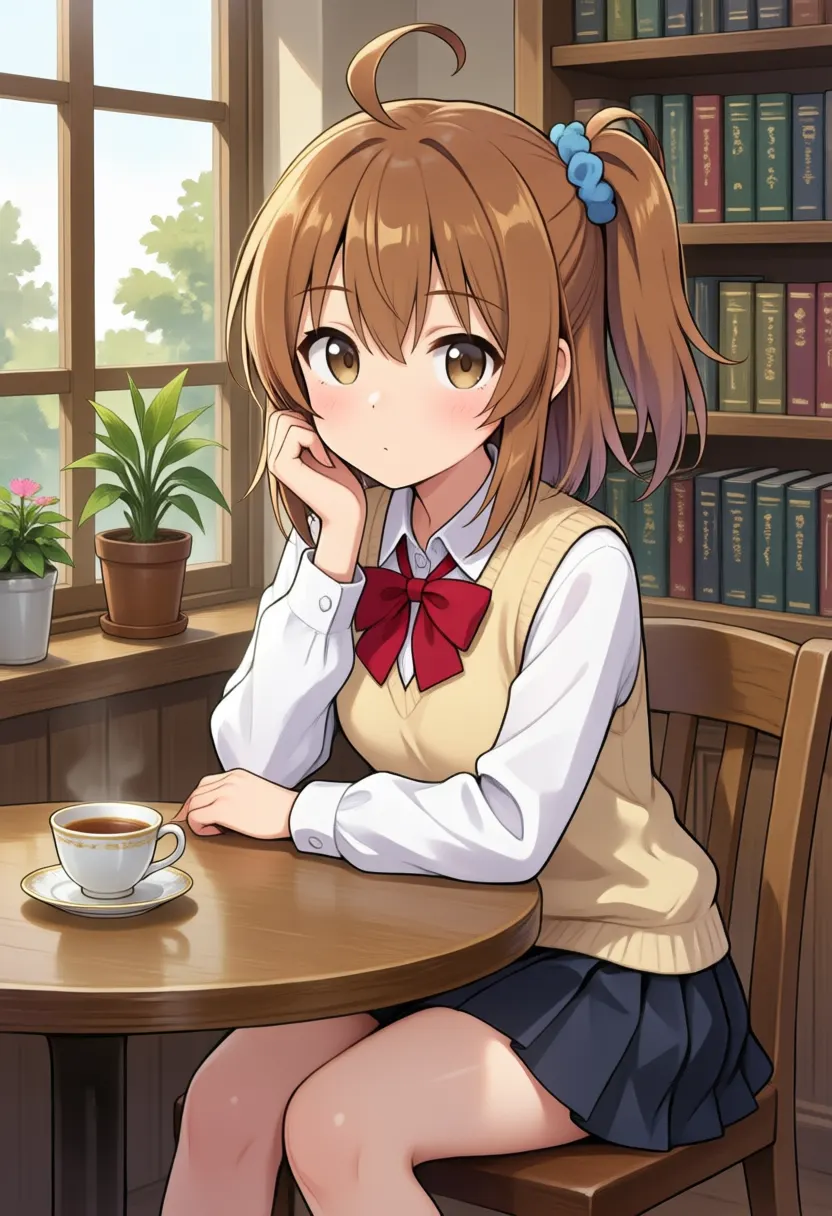
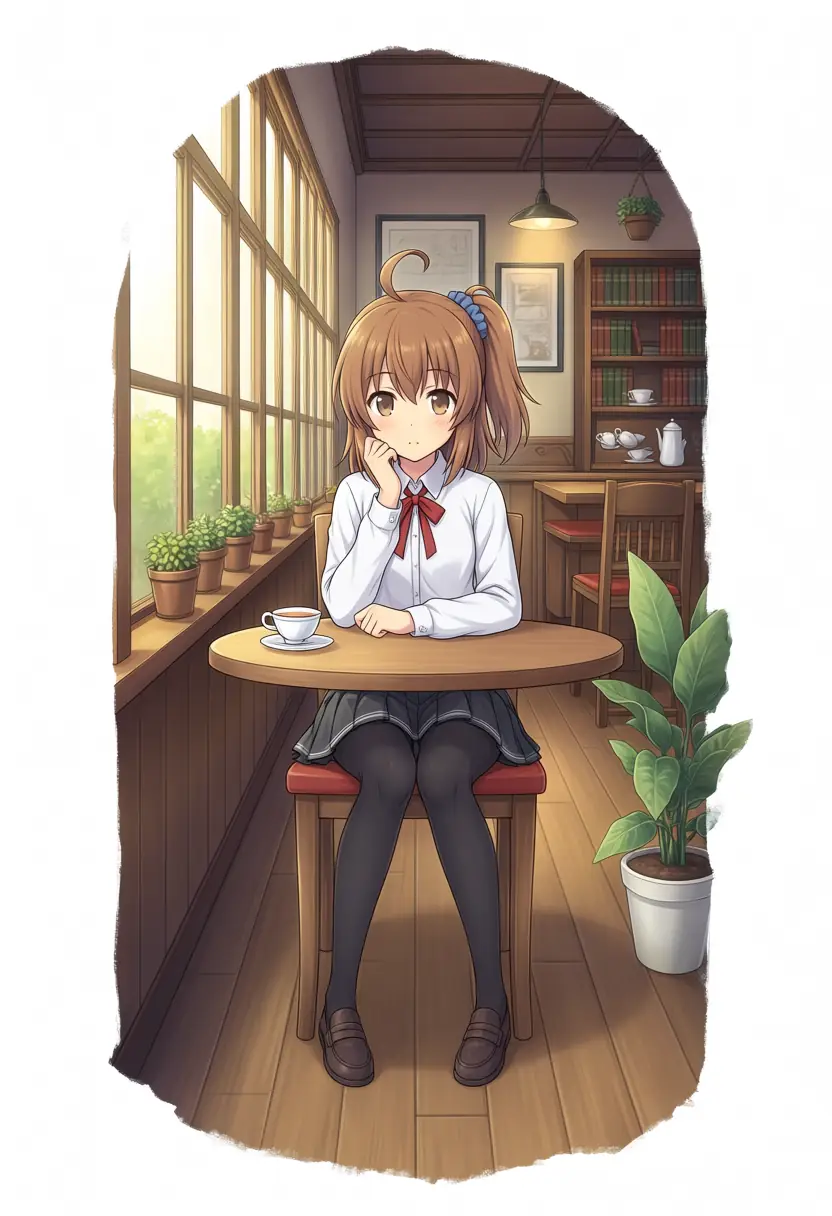
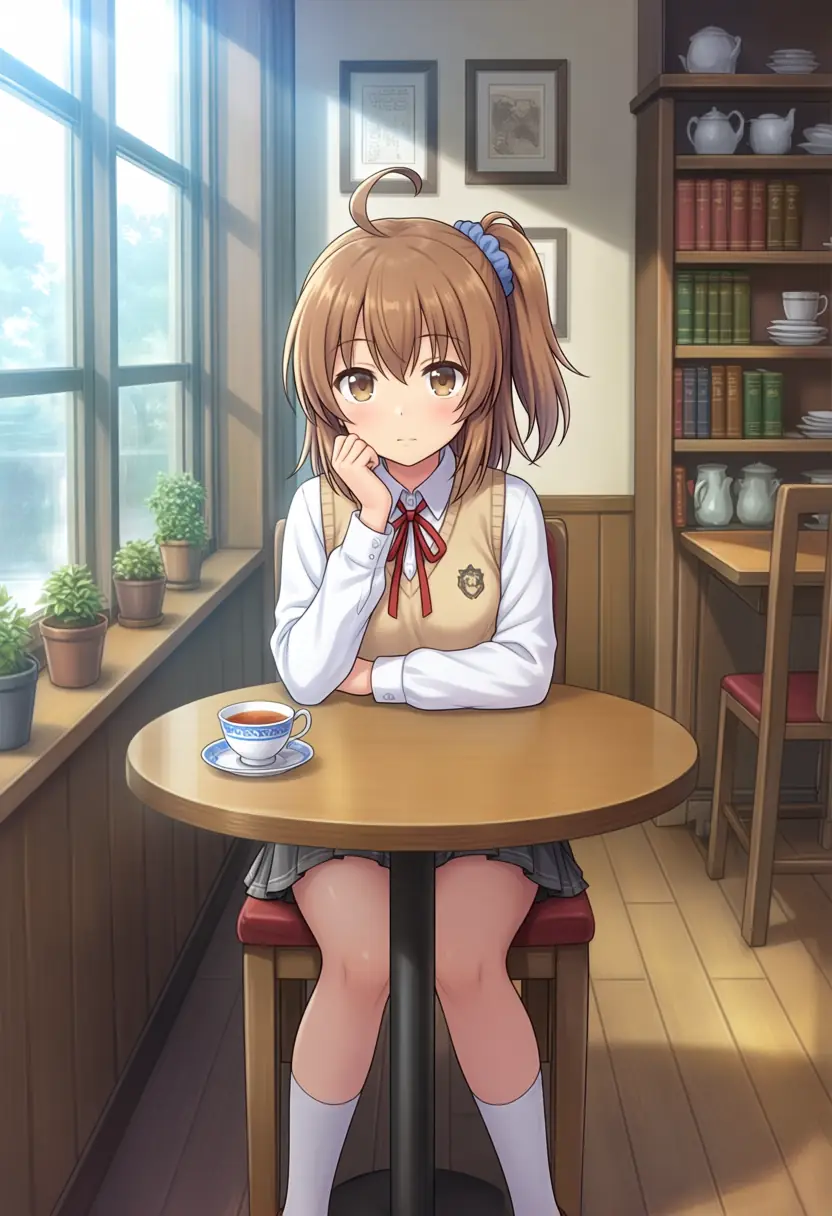
AMIXA native uses 24 steps / CFG 4, so it is naturally slow compared with normal Turbo-based Anima use. At first it looked stalled, but it completed after waiting.
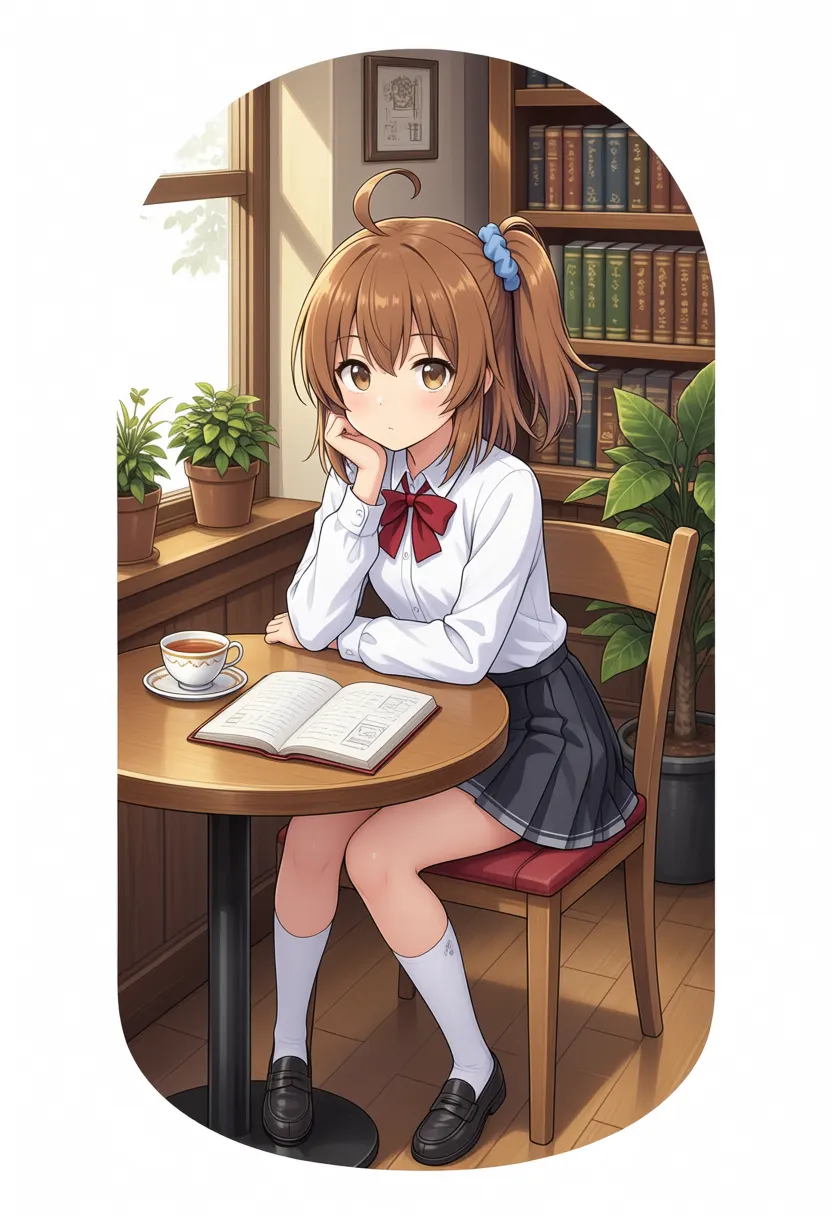
Between Turbo outputs, the background difference is hard to see because the subject is closer. In native, AMIXA is quite good. The window, bookshelf, plants, and books on the table all have background detail, and the result looked more natural than JANIMA. JANIMA is organized, but the background is a little thin. Here again, AMIXA feels closer to base than JANIMA, with base-like composition and background behavior plus stronger color. Among these samples, the native cafe image may be AMIXA’s best result.
Which One To Use
AMIXA adds bright color to base-like drawing more than it pushes faces and outfits the way JANIMA does. The Kana and Kei solo tests work, the full-body two-character layout works, and the native cafe background looked more natural than JANIMA.
As a checkpoint, it is usable enough. Personally, it is about as easy to keep in the regular rotation as WAI-Anima. I would use it as an Anima derivative for normal Turbo use, then also try native when I want to push a background-heavy image.