One 248 keV nuclear recoil in 2.84 tonne-years, global 2.6σ (0.5% background probability), and five arXiv papers within two hours, three landing on a roughly 1 to 1.1 TeV higgsino. What LZ ruled in and out, from the preprint.
Science Advances 2026: 1,419,857 single-photon paths reconstructed to test Feynman's 1948 postulates directly. Explained with arrows from energy conservation and the double slit, down to what 94% fidelity means.
McCoy, Soulos, Linzen and Smolensky swap every GPT-OSS input-token hidden state for a closed-form tensor product formula; accuracy drops at most 2.36 points and 31 causal interventions average 0.903.
LEWM predicts a 7-class emotion label for the human on screen, not a state of its own. Its 45.72% is a cosine-similarity delta vs WorldGPT, and 'self-aware' never appears in the paper.
Qwen's Gated Attention (NeurIPS 2025 Best Paper) puts a per-head sigmoid gate on SDPA output. First-token attention drops 46.7%→4.8%, max activation 1053→94. Why it works and how Qwen3-Next uses it.
IEEE S&P 2026 study of 2.7M arXiv submissions: 265 API tokens, 7,326 GPS-tagged papers, 699 editable Google Docs, and why withdrawn versions stay online.
At Itaú, a staff engineer delivered a 4-person, 18-week project in 9 weeks with 4 AI agents — but it worked only because they knew the codebase deeply. What the case study really says about AI and team size.
Sakai Lab fMRI study (N=25, U-Tokyo): reading a story's first half on a tablet stretched response time on integration questions and skipped the language-area savings paper produced. Full stats (F/p/q/r), plus the MangaFlow manga-generation AI as the drawing-side counterpart.
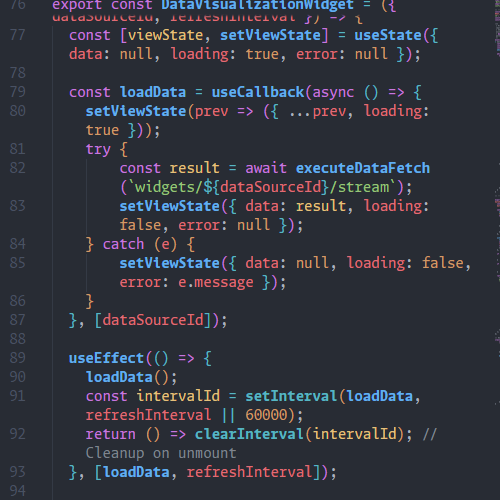
A paper claims that a single binary operator eml(x, y) = exp(x) - ln(y) combined with the constant 1 can express all elementary functions — arithmetic, trig, logarithms, even pi. I read the paper and tested it in 5 languages.
Meta AI's HyperAgents performs metacognitive self-correction that optimizes improvement strategies themselves. Self-improvement appears in four non-coding domains, and strategies learned in one domain transfer to another, along with spontaneously acquired persistent memory.
A paper explains that two seemingly mysterious Transformer behaviors, heavy attention on specific tokens and unusually large activations in specific dimensions, are actually manifestations of the same mechanism.
How should memory be allocated in reasoning models? This paper explains the trade-offs among quantization, KV cache, and test-time compute, based on 1,700 experiments.