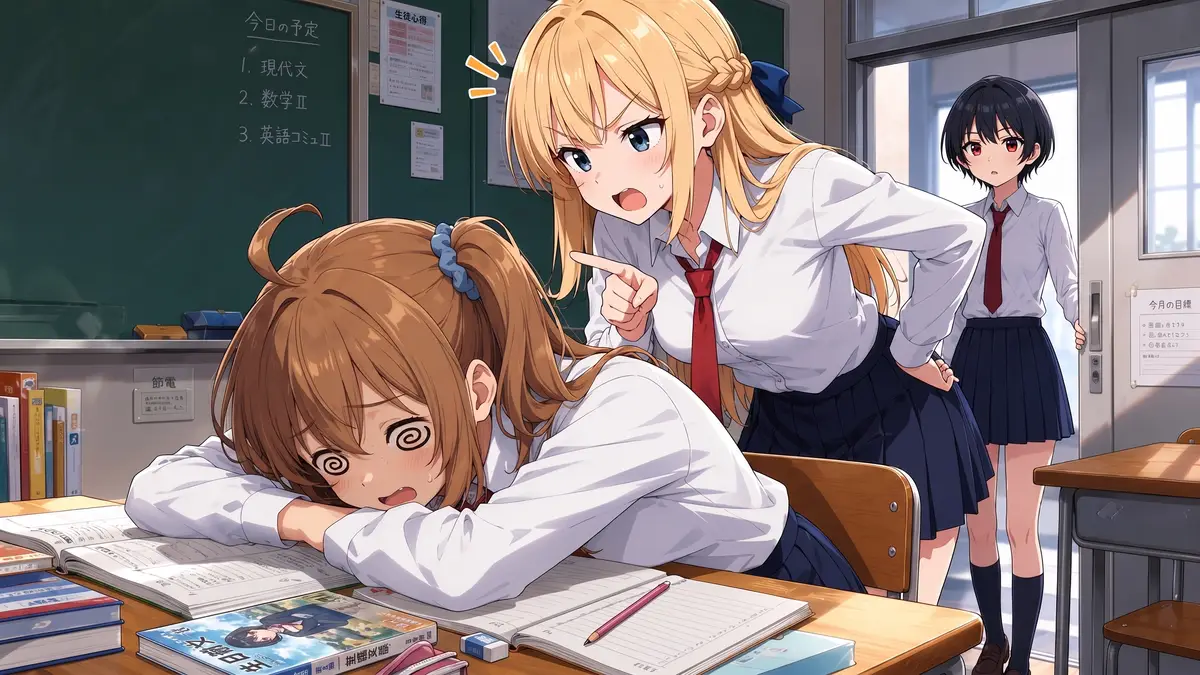
On M1 Max with Anima-Base v1.0 and WAI-Anima v1: the official negative is short. Trim the long Illustrious bad-hands list, move structure to positive tags, keep `safe` upfront.
Ran WAI-Anima v1.0 with a custom character LoRA on an M1 Mac to see if 2- and 3-character compositions actually hold up. Notes on what breaks and what holds at different LoRA weights, with practical settings that stay stable.
On M1 Max 64GB, SetLatentNoiseMask returns unchanged images with no error. LanPaint alone takes 32 min; adding Crop-and-Stitch drops text inpaint to 2:31.
40GB+ VRAM for a 3B model. VBench 85.11 beats dedicated 14B video generators. RunPod GPU costs from $2.2/session. The 'unified' model still ships as two checkpoint files.
Why Google added BERT to search in 2019, how MLM training really works (15% mask, 80/10/10, WordPiece), and where encoder-only models still beat LLMs — rerank, classification, and OCR correction.
Khala open-source song generator needs 24GB+ NVIDIA VRAM, ~52GB weights, and still carries a 2026-05-07 quality warning. Notes on the 64-layer RVQ pipeline and generate API.
xAI x-algorithm second commit: Phoenix retrieval+ranking runs locally on 537k sports posts with 3GB artifacts. Ad blending and candidate isolation code added since January.
Tested on M1 Max 64GB ComfyUI: Anima-Base v1.0 matches preview3-base in speed; WAI-Anima kana LoRA hits 22% on light prompts but 67% with hood+robe+embroidery added.
Verdict on GTIG's May 11, 2026 report: the first confirmed AI-generated zero-day, a Python 2FA bypass for an OSS admin tool, was caught by a hallucinated CVSS score and textbook Pythonic code structure.
oMLX 0.3.9.dev2 release notes from the angle of Codex/Copilot on Mac local LLMs: Gemma 4 VLM MTP, DFlash, omlx launch copilot, SSD KV cache — what each changes for agent workflows.
VoxCPM2 sits in the tokenizer-free corner. Mapped vs F5-TTS, CosyVoice2, Irodori-TTS, Style-Bert-VITS2; plus why Japanese TTS still leans on OpenJTalk.