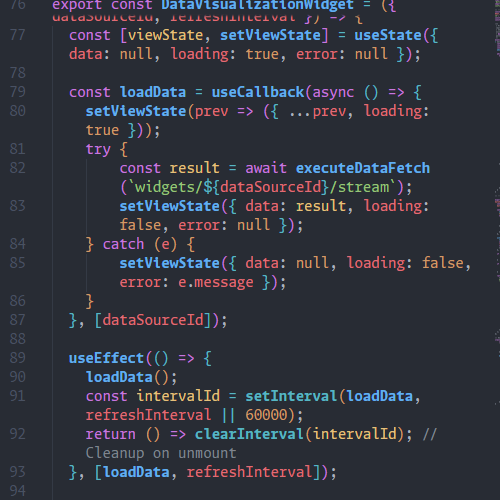
Starting from Claude Code's 1.67B token runaway (anthropics/claude-code#4095), this traces why tool responses need is_complete, retryable: false, duplicate detection, and orchestrator-level budget caps. Directly applicable to MCP server design.
An arXiv paper reports that fine-tuning GPT-4o, Gemini 2.5 Pro, and DeepSeek-V3.1 on summary-to-text expansion tasks increases verbatim reproduction of copyrighted books.
Hands-on log of building the DEV article's PDF RAG on M1 Max 64GB, extending it with images via CLIP, and pushing through Japanese with bge-m3 + Qwen3.6 35B. Documents the modality gap, the dual inference server crash, and LLM-jp 4-8B's empty chat template silently dropping the system role.
Notes on a DEV Community article that wires up FastAPI as an OpenAI-compatible RAG API layer with llama.cpp, Chroma, and Open WebUI, plus where the architecture fits and what to watch for.
A hands-on log of running Qwen-Scope's Sparse Autoencoder locally on M1 Max 64GB with Qwen3-8B-Base, extracting feature IDs that discriminate between Japanese, English, code, and Chinese from a single middle layer.
The Qwen team released Qwen-Scope, a Sparse Autoencoder suite for Qwen3/Qwen3.5. 14 groups of SAEs covering inference-time steering, evaluation analysis, toxicity classification, data synthesis, and training improvement.
OpenAI published a full investigation into why GPT-5.1+ kept inserting goblin and gremlin metaphors, tracing the cause from a Nerdy persona's reward signal through SFT data contamination to a Codex developer prompt suppression.
NII/LLMC released CC Audio and Archive.org Audio Dataset. URL lists, metadata, and a downloader covering 48,000+ hours of Japanese audio. What it actually contains and how it fits into TTS, ASR, and audio model training.
After Xiaomi MiMo-V2.5's weights went public, I checked whether it runs on Mac/ROCm or on cloud GPU (RunPod/GCE). It's still rough on local hardware, but RunPod's 4x H200 runs it for ~$14/hr and GCE Spot H100 brings it down to ~$1.6/hr.
SB Intuitions released sarashina2.2-tts, an LLM-based TTS model focused on Japanese. It clones speaker voice and style from short reference audio without fine-tuning, and handles Japanese-English code-switching.
Inclusion AI released LLaDA2.0-Uni. A 16B MoE diffusion LLM that handles image understanding, 1024px image generation, image editing, and interleaved text-image generation in a single model.
An LLM safety monitor's evaluator can be tricked into clearing dangerous sessions when the attacker plants fake analysis text in the monitored conversation. Experimental results, defense limits, and structural separation points.